A stiff ignition key that refuses to turn without constant jiggling often signals internal wear in your lock cylinder rather than a total switch failure. Instead of paying for expensive dealership replacements, targeted ignition lock repair restores smooth operation by addressing worn pins or split wafers directly.
This guide details precise diagnostic steps to rule out electrical issues before you disassemble anything. You will learn specific rebuild protocols for Ford F-250 pin systems and modification techniques for Toyota Tundra split wafer failures to get your vehicle running reliably again.
Diagnose Before You Disassemble the Ignition

Skipping preliminary checks often leads to unnecessary disassembly of a perfectly functional cylinder. You must rule out simple electrical or key-related issues that mimic mechanical lock failure before taking apart your steering column.
Confirm Battery and Fuse Health First
A dead battery or blown fuse can prevent electrical engagement even if the key turns smoothly. Technicians always verify these external factors first to avoid wasted effort on the wrong component.
- Check battery voltage to ensure it reads 12.4V or higher.
- Inspect the ignition circuit fuse using your owner’s manual diagram.
- Look for corrosion on battery terminals and clean them if necessary.
If dashboard lights fail to illuminate when you turn the key to “Run,” the issue is likely electrical rather than mechanical.
Inspect the Ignition Key Condition
A bent, worn, or damaged key is a frequent cause of ignition problems that owners often mistake for cylinder failure. Comparing your current key to a spare helps identify visible bends or smoothed-down cuts.
- Try a known-good duplicate key to see if it turns smoothly.
- Replace any key that appears visibly bent or worn.
- Pro Tip: Never force a bent key into the cylinder as it can damage internal pins or wafers permanently.
If the key inserts but will not turn, or only works at a specific angle, the lock cylinder likely has internal wear requiring repair.
Identify Mechanical vs. Electrical Failure
Use specific symptoms to pinpoint whether your problem is mechanical wear or an electrical fault. This distinction determines whether you need ignition lock repair or an electrical diagnosis.
| Symptom | Likely Cause |
|---|---|
| Key won’t turn, requires jiggling | Mechanical wear (pins or wafers) |
| Key turns but engine doesn’t crank | Electrical (battery, starter, fuses) |
| Intermittent start after manipulation | Internal obstruction (raised split wafer) |
Focus on the electrical system if the key turns smoothly but the car does not start. Proceed to cylinder repair only if turning the key is the actual problem.
Pin-and-Spring Systems: How They Fail
Vehicles like the Ford F-250 utilize a pin-and-spring ignition cylinder where vertical pins align with key cuts to allow rotation. Over time, normal wear degrades performance and causes the key to stick.
Internal Wear Causes Stiff Rotation
Each pin is pushed down by a small spring, and these components wear unevenly over years of use. As springs lose tension or pins wear down, they fail to align at the shear line where the cylinder separates from the housing.
- Stuck pins: These may protrude too far or sit too low within the chamber.
- Weak springs: These fail to reset pins properly after key removal.
- Result: You experience a gritty feel, resistance, or complete lock-up.
Recognize the Failure Signs
Classic signs of pin and spring degradation include a key that only turns after repeated attempts. The rotation often feels rough or “notchy” instead of smooth.
- Key requires constant wiggling to engage the mechanism.
- Cylinder feels gritty during rotation.
- Key sticks in certain positions without turning fully.
These symptoms indicate your system needs a full rebuild to restore proper function.
Rebuild Ford F-250 Ignition Cylinder
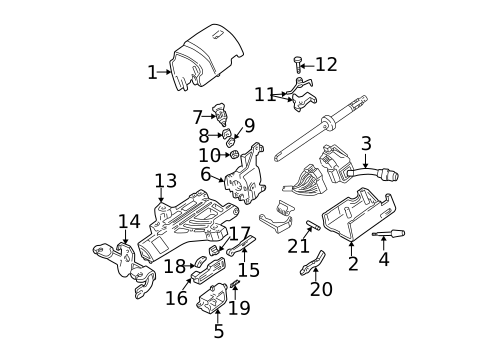
Replacing worn pins and springs restores smooth operation and avoids costly OEM replacements. This ignition lock repair is ideal for DIYers with basic tools and attention to detail.
Remove the Ignition Cylinder Safely
- Insert the key and turn it to the Run position just before Start.
- Remove the lower steering column shroud to access the cylinder base.
- Locate the release slot on the bottom of the housing.
- Insert a flathead screwdriver and press the release tab inward.
- Pull the cylinder straight out while holding the tab.
Visual cue: The cylinder should slide out smoothly without requiring excessive force.
Disassemble and Analyze Pins
With the key inserted, slide the core forward to expose the pin chambers for inspection. Use a fine pick to remove pins one side at a time, typically handling three per side.
- Lay out pins in order from 1 to 5 for accurate reference.
- Test each pin size by inserting it with the key still in place.
- Identify pins that stick out above the cylinder or sit below the surface.
Your goal is to find the specific size that sits perfectly flush with the cylinder body.
Replace Springs and Pins
Never reuse old springs because fatigue is the root cause of most failures in these systems. You must install new springs to ensure long-term reliability.
- Insert a new spring into each chamber carefully.
- Add the correctly sized pin from your test on top of each spring.
- Verify all pins sit flush when the key is inserted fully.
- Ensure no binding or resistance occurs during insertion.
Pro Tip: Work on one side then flip the cylinder to keep your organization simple.
Reassemble and Test Operation
Install the white plastic retainer inside the end cap as it locks the assembly in place securely. Secure the end cover over the pins and insert the key to rotate through all positions.
- Test rotation from Lock to Accessory to Run and finally Start.
- Ensure rotation is smooth with zero resistance at every stage.
- Recheck pin heights and spring alignment if binding occurs.
If the key binds, disassemble and verify your pin selection again.
Reinstall in Steering Column
- Align the cylinder notch with the column slot precisely.
- Push in while compressing the retaining clips gently.
- Release clips until they snap into place firmly.
- Test full operation before replacing the shroud.
Time estimate: Experienced users complete this process in 45 to 60 minutes.
Split Wafer Systems: Toyota Tundra Failure

The 2000 Toyota Tundra uses a split wafer security system with two half-wafers in one slot for anti-theft protection. This design is prone to a specific failure mode known as upward shift.
Why Split Wafers Cause Jiggling
Repeated use wears the wafer edges and cylinder walls over time. One half of the split wafer gradually shifts upward by approximately 1/32 inch, creating a physical obstruction.
- The raised half blocks cylinder rotation completely.
- The key only turns when jiggled to force the wafer back.
- Over time, the obstruction becomes permanent without intervention.
This specific wear pattern requires a different approach than standard pin systems.
Remove Split Wafers for Permanent Fix
This modification eliminates the failure point entirely. While it reduces security complexity slightly, it ensures reliable daily operation for most drivers.
Access the Wafer Chamber
- Remove the cylinder using the Run position and release tab method.
- Carefully pry open or break the face plate to expose internal wafers.
- Apply gentle pressure with a small flathead to avoid damage.
Warning: This step is irreversible so only proceed if repair is absolutely necessary.
Identify and Remove Split Wafers
Locate the split wafers which appear as two halves in a single slot. Remove and discard both halves of these specific wafers immediately.
- Leave the six standard wafers intact on each side.
- Do not attempt to repair or shim the split wafers.
- Discard the compromised halves to prevent future issues.
Structural compromise makes repair impossible, so removal is the only viable option.
Reassemble and Confirm Smooth Operation
Close the cylinder housing as no additional parts are needed for this modification. Insert the key and verify it turns smoothly without any jiggling required.
- Test all positions including Lock, Accessory, Run, and Start.
- Confirm the cylinder operates reliably without obstruction.
- Expect years of reliable service with the obstructive wafers gone.
Security Trade-Off: Know the Risk
Removing split wafers reduces complexity and makes the lock theoretically easier to pick. This trade-off is acceptable for most drivers who do not live in high-theft areas.
- Reduced complexity: Fewer tumblers mean easier bypass potential.
- Acceptable for most: Reliability outweighs marginal security loss for many.
- Not recommended: Avoid this method in urban or high-risk zones.
Opt for full cylinder replacement if you require maximum anti-theft protection.
When to DIY vs. Call a Pro
Ignition lock repair can be done at home, but professional service offers advantages in speed, warranty, and advanced diagnostics. Your choice depends on your skill level and vehicle security needs.
DIY Repair: Pros and Pitfalls
DIY repair costs 70 to 90 percent less than dealership replacement and gives you full control over parts quality. However, it requires precision tools and carries a high risk of error if pins are sized incorrectly.
- Advantages: Significant cost savings and satisfying long-term fixes.
- Challenges: Requires pin kits, picks, and mechanical precision.
- Best for: Experienced DIYers and budget-conscious owners.
You bear full responsibility for the repair with no warranty coverage.
Professional Locksmith: When to Hire
Choose a professional if you lack tools, confidence, or have a transponder key requiring programming. Licensed technicians offer mobile service and written warranties on parts and labor.
- Choose a pro if: You need broken key extraction or key programming.
- Professional benefits: Mobile service, full inventory, and insured work.
- Cost: Typically less than half of dealership pricing.
Modern vehicles and security-sensitive models often benefit from professional attention.
Prevent Future Ignition Lock Failure
Extend the life of your ignition cylinder with simple maintenance habits after repair. Proper care prevents premature wear and ensures smooth operation for years.
Replace Worn Keys Immediately
A bent or worn key accelerates internal wear significantly. Always carry a perfect-condition spare and retire damaged keys to protect your newly repaired cylinder.
Use Dry Lubricant Sparingly
A graphite or Teflon-based dry lubricant can prevent dust buildup and ensure smooth movement. Do not use oil or WD-40 as they attract dirt and gum up mechanisms.
- Apply only if stiffness returns after long-term use.
- Use dry lubricants specifically designed for locks.
- Avoid liquid lubricants that trap debris.
Ensure Proper Sealing
The white plastic retainer and end cover protect against debris entry. Always reinstall them fully because exposed pins will wear faster than protected ones.
Avoid Excessive Keychain Weight
Heavy keychains stress the ignition cylinder over time and accelerate wear. Use a lightweight fob or remove unnecessary items from your key ring.
Frequently Asked Questions About Ignition Lock Repair
Can I fix an ignition lock without replacing the whole switch?
Yes, you can often repair the internal lock cylinder by replacing worn pins, springs, or removing faulty split wafers. This targeted ignition lock repair saves money compared to replacing the entire ignition switch assembly.
Why does my key only turn when I jiggle it?
Jiggling usually indicates internal wear where pins or split wafers have shifted out of alignment. In Toyota Tundra models, a split wafer often shifts upward by 1/32 inch, creating an obstruction that jiggling temporarily bypasses.
Is removing split wafers from my Toyota safe?
Removing split wafers provides a permanent fix for sticking keys but slightly reduces anti-theft complexity. It is safe for most drivers but not recommended for vehicles in high-theft areas where maximum security is a priority.
How long does an ignition cylinder rebuild take?
An experienced DIYer can complete a pin-and-spring rebuild in 45 to 60 minutes. First-time attempts may take longer due to the precision required for pin sizing and spring installation.
Do I need special tools for ignition lock repair?
Yes, you need specific tools including a pinning kit, fine picks, and screwdrivers for column access. Professional locksmiths also use specialized equipment for transponder programming and broken key extraction.
What causes ignition keys to stop turning suddenly?
Sudden failure often results from a bent key, blown fuse, or dead battery rather than cylinder wear. Always check these external factors before assuming the lock cylinder itself has failed internally.
Key Takeaways for Successful Ignition Lock Repair
Successful ignition lock repair depends on accurate diagnosis and choosing the right method for your vehicle type. Ford F-250 owners should rebuild worn pins and springs, while Toyota Tundra drivers may need to remove obstructive split wafers.
Always rule out electrical issues and key damage before disassembling your cylinder. Whether you choose DIY repair or professional service, addressing internal wear promptly restores reliable starts and saves hundreds compared to dealership replacements.