You are parked for the night when a sudden worry strikes about whether your entryway is truly secure. Learning how to lock RV door from inside correctly is the difference between a peaceful sleep and a vulnerable situation.
This guide explains exactly how to engage your dead bolt, why you must avoid certain locking habits, and what to do if you lose your key. You will learn specific steps to ensure your home on wheels stays safe while you rest.
Engage the Bottom Dead Bolt for Maximum Security
The most critical step in securing your vehicle is engaging the bottom dead bolt. This mechanism extends a solid metal bar deep into the door frame to prevent forced entry. Unlike the top latch, which can often be bypassed with simple tools, the dead bolt physically blocks the door from opening.
Turn the Interior Lever to Lock
Locate the dead bolt lever or knob near the bottom of your interior door panel. Turn this mechanism clockwise or slide it downward until you hear a firm click. This action pushes the bolt into the jamb, creating a barrier that cannot be pushed open from the outside.
Pro Tip: Gently pull the interior handle after locking to confirm the bolt is fully extended and the door does not budge.
Understand the Security Difference
Your RV relies on two distinct systems working together. The top latch keeps the door closed while driving but offers minimal resistance to intruders. The bottom dead bolt provides the actual security you need when stationary.
- Top Latch: Catches automatically but can be slipped open with a wire.
- Bottom Dead Bolt: Requires manual engagement and stops forced entry.
Avoid Dangerous Locking Mistakes That Trap You Inside
Using your locks incorrectly can lead to dangerous situations where you cannot exit your vehicle. The most common error involves engaging the dead bolt while someone else locks the exterior handle. If both are locked, you are trapped inside with no way to open the door without a key.
Never Lock the Outside Handle While Inside
If you are inside the RV, ensure no one locks the exterior handle while the dead bolt is engaged. Many RV doors have spring-loaded handles that lock automatically when closed. If a family member shuts the door from the outside while you have the dead bolt on, you will be stuck.
Critical Safety Rule: Do not engage the dead bolt unless you have the physical key immediately accessible.
Keep Your Key Accessible at All Times
Always store your key in a designated spot near the door if you plan to use the dead bolt. Placing it in a bedside drawer or an emergency kit ensures you can unlock the door instantly if an emergency requires evacuation.
- Store the key in a consistent location every time.
- Teach all occupants where the key is kept.
- Never leave the key outside the vehicle while the dead bolt is engaged.
Follow This Step-by-Step Locking Procedure

Securing your RV requires a specific sequence to ensure effectiveness. Following these steps guarantees that your door is latched tightly and the dead bolt is fully engaged.
1. Close and Latch the Door Firmly
Push the door shut with enough force to hear the top latch click into the frame. A door that is not fully closed will prevent the dead bolt from extending properly. Check that the handle sits flush against the door frame.
2. Extend the Dead Bolt Manually
Reach down to the lower lock mechanism and turn the lever. Watch the bolt slide out smoothly into the door jamb. If you feel resistance, stop immediately to avoid stripping the internal gears.
3. Test the Lock Engagement
Pull firmly on the interior handle to verify the door will not open. If the door moves even slightly, the bolt may not be fully extended. Re-engage the lock and test again until the door feels solid.
4. Verify Key Access Before Sleeping
Before settling in for the night, confirm your key is within arm’s reach. This simple habit prevents panic if you need to exit quickly due to fire or other emergencies.
Know Your Lock Types and Their Limitations
Not all RV locks function the same way, and understanding your specific system is vital for security. Most units use manual mechanisms, but some newer models feature electronic components that require different maintenance.
Manual vs. Electronic Lock Systems
Manual locks are generally preferred for their reliability and simplicity. They do not rely on batteries and are less prone to failure in harsh weather conditions. Electronic locks offer convenience but often suffer from battery drain and moisture damage.
- Manual Locks: Durable, simple, and unaffected by power loss.
- Electronic Locks: Prone to battery failure and internal corrosion.
Why Electronic Locks Often Fail
Many RV owners report issues with electronic keypad locks failing during trips. Moisture from rain or high humidity can corrode the internal contacts. Additionally, batteries can die unexpectedly, leaving you unable to enter or exit without a backup plan.
Expert Note: If you have an electronic lock, always keep the manual override key handy and test the battery levels monthly.
Prevent Accidental Lock-Ins and Ensure Exit Routes
Getting locked inside your RV is a serious safety hazard that you can easily prevent. Taking proactive measures ensures that you always have a way out, regardless of the status of your main door lock.
Use Secondary Exits for Emergency Escape
Familiarize yourself with all emergency exits in your RV, including side doors and roof hatches. Ensure these windows open easily and are not blocked by storage items. Everyone in your group should know how to operate these exits in the dark.
- Test window latches regularly to ensure they are not stuck.
- Clear furniture away from emergency exit paths.
- Install a breakaway hammer near sleeping areas for glass emergencies.
Maintain Clear Exit Paths
Clutter inside the RV can block your path to the door or windows. Keep the area around the main door and emergency exits free of shoes, bags, and other obstacles. This ensures a quick escape if seconds count.
Handle Lost Keys and Lock Codes Efficiently

Losing your key does not mean you need to replace the entire lock assembly. Most RV locks have a specific code that allows a professional to create a new key quickly and affordably.
Locate Your Unique Lock Code
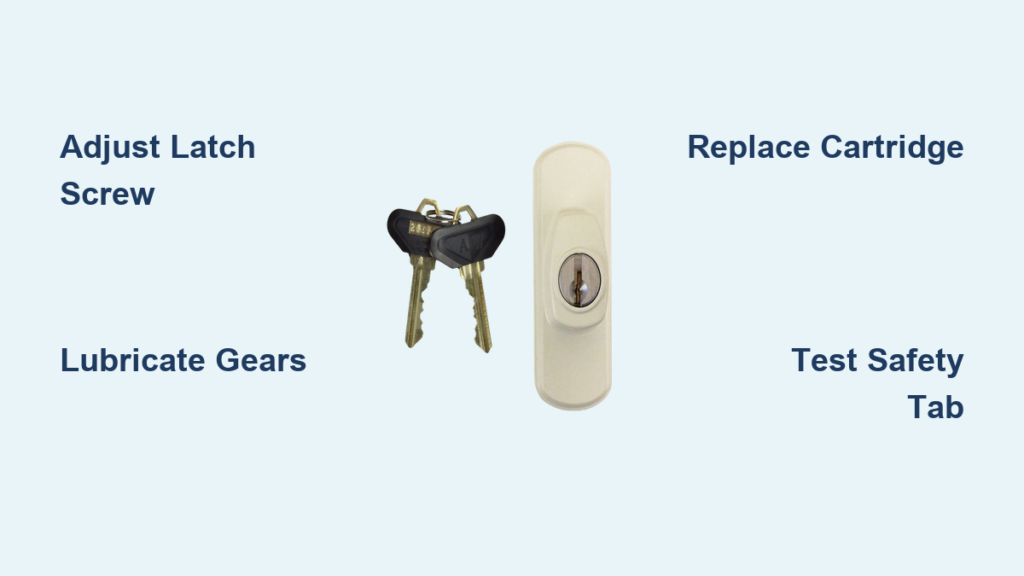
Look behind the interior door handle assembly for a small white label. This label displays a code, such as “Code 316,” which corresponds to your specific lock cylinder. This code is the key to solving your problem without major repairs.
Fact: There are only about 50 to 60 key variations for most RV locks, making duplication very fast.
Call a Locksmith Instead of a Dealer
Contact a local mobile locksmith and provide them with your lock code. They can cut a new key on-site for a fraction of the cost of a dealer replacement. A new key typically costs under $25, whereas a full lock replacement can exceed $170.
- Ask for a “purple key” if you need a generic replacement.
- Avoid buying expensive electronic units if a simple key works.
- Search online marketplaces for used lock panels if your unit is damaged.
Maintain Your Lock System for Long-Term Reliability
Regular maintenance prevents your locks from sticking or failing when you need them most. Dirt, dust, and lack of use can cause mechanisms to seize up over time.
Clean and Lubricate Moving Parts
Wipe down the latch and bolt area with a clean cloth to remove debris. Apply a dry lubricant like graphite spray to the moving parts to ensure smooth operation. Avoid using oil-based products like WD-40, as they attract dust and gum up the mechanism.
Replace Worn or Damaged Components
If your latch feels loose or the door sags, it may be time for a replacement. Removing the two mounting screws allows you to swap out the entire panel in minutes. Replacement parts are widely available and affordable for most DIY enthusiasts.
Final Safety Checklist for RV Door Security
Securing your RV is a simple process when you follow the right habits. Use this checklist to ensure you have taken every necessary step to protect your home on wheels.
- Engage the dead bolt whenever you are inside and stationary.
- Keep your key accessible at all times when the dead bolt is on.
- Never drive with the dead bolt engaged.
- Store your lock code in your phone or emergency folder.
- Test your secondary exits regularly.
Frequently Asked Questions About Locking RV Doors
Can I lock my RV door from the inside without a key?
Yes, you can engage the dead bolt using the interior lever without a key. However, you must have the key nearby to unlock it if the outside handle gets locked, or you will be trapped inside.
What should I do if I lose my RV door key?
Find the lock code label behind your interior door handle. Call a mobile locksmith with this code, and they can cut a new key for under $25 without replacing the whole lock.
Is it safe to use the dead bolt while driving?
No, never drive with the dead bolt engaged. It can jam due to frame flexing and prevent emergency exit. Only use the top latch while the vehicle is in motion.
Why do electronic RV locks fail so often?
Electronic locks often fail due to battery depletion, moisture damage, or poor internal construction. Manual locks are generally more reliable for long-term RV use.
How do I know if my dead bolt is working correctly?
After engaging the lock, pull firmly on the interior handle. If the door does not open and you feel solid resistance, the dead bolt is functioning properly.
Key Takeaways for Securing Your RV Door

Mastering how to lock RV door from inside relies on using the bottom dead bolt correctly and keeping your key accessible. The dead bolt provides essential security when parked, but it becomes a trap if you lose your key or let someone lock the outside handle.
Always verify your lock engagement before sleeping and maintain your mechanism with regular cleaning. By following these steps and keeping your lock code handy, you ensure both safety and peace of mind on every trip.