You are standing at your front door with a key that simply will not turn. No matter how much you jiggle or twist, the lock stays stubborn and refuses to budge. This frustrating scenario where a key not turning in lock happens often due to dryness or minor debris. The good news is that you can usually fix this issue in minutes using common household items.
This guide delivers three fast and proven fixes that actually work for your specific situation. You will learn how to use saliva for emergencies, apply pencil graphite for dry lubrication, and utilize specialized dry lube for long-term results. We will also cover how to diagnose underlying issues so you do not waste time on the wrong solution. Let’s get your door open again.
Use Saliva to Free the Lock Immediately
When you are locked out with no tools nearby, your body provides the first solution. Saliva acts as a quick emergency lubricant that can get a stuck key moving again. This method is perfect for those moments when you need immediate access without searching for supplies.
How to Apply Saliva Correctly
- Spit a small amount onto your finger or directly onto the key blade.
- Rub the moisture along the full length of the metal part entering the lock.
- Insert the key slowly into the keyhole.
- Wiggle it gently back and forth without applying excessive force.
The moisture reduces friction and can free up corroded or sticky internal pins quickly. Most users see results within 10 to 20 seconds of gentle wiggling.
Warning: Never force the key. If it does not turn easily, stop immediately. Forcing it can snap the key or damage the lock permanently.
When Saliva Works Best
This method works best for short-term jams caused by dryness or minor gunk buildup. It is ideal for outdoor locks exposed to cold air or keys that have not been used in weeks.
- Outdoor locks exposed to cold or dry air
- Keys that haven’t been used in several weeks
- Slight resistance with no grinding noise
Once the key turns, follow up with a longer-lasting lubricant to prevent the problem from returning.
Lubricate Key with Pencil Graphite
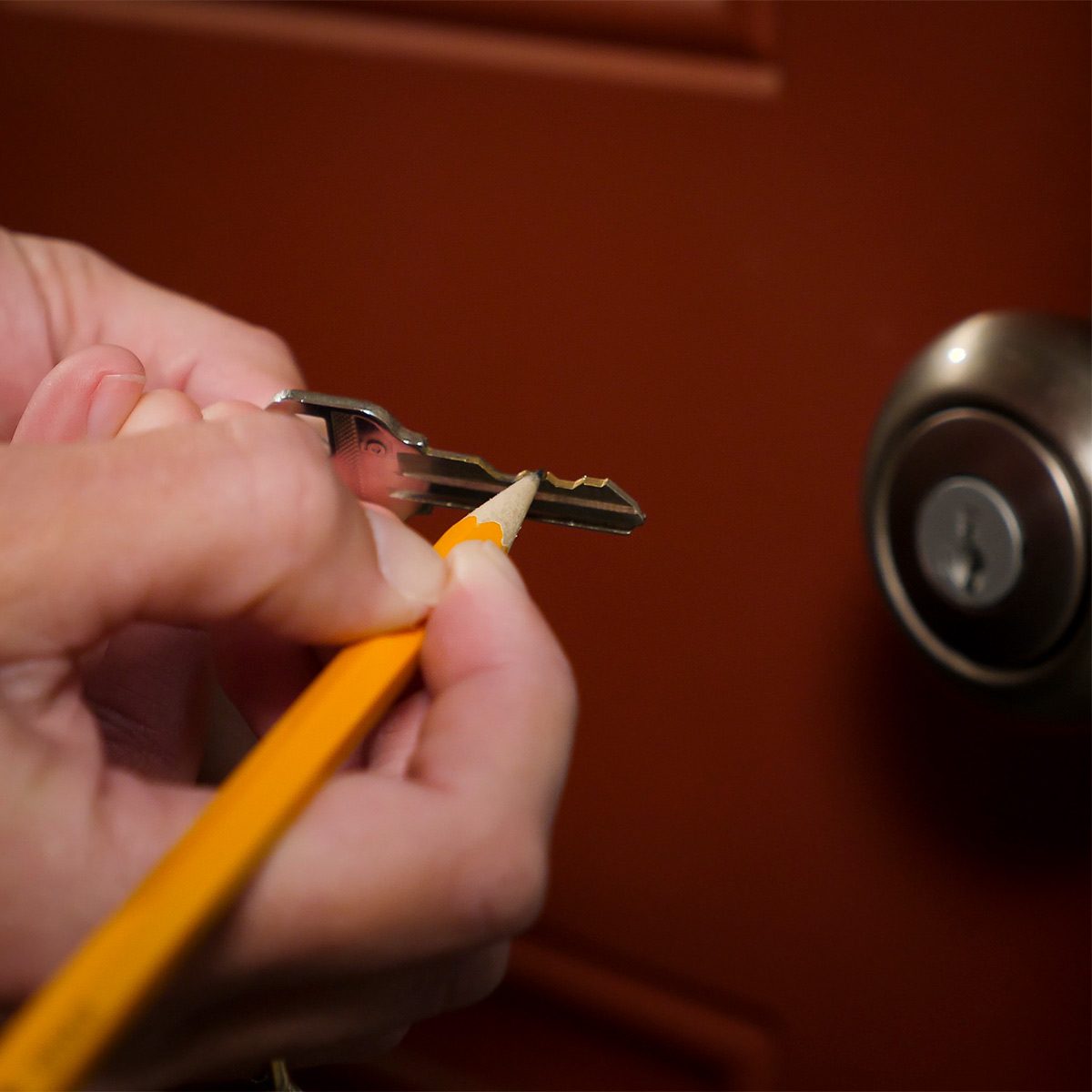
If you do not have oil, your pencil holds a secret weapon. Graphite powder is a natural dry lubricant trusted by locksmiths for decades. It provides a cleaner solution than wet oils and works effectively on various lock types.
Apply Graphite from a Pencil
- Take a standard number 2 pencil.
- Sharpen it to expose fresh lead.
- Rub the tip along the entire blade of your key thoroughly.
- Insert the coated key into the lock cylinder.
- Turn slowly while wiggling side to side.
Repeat this process two to three times, reapplying graphite as needed. The graphite slips into the lock cylinder and coats the internal pins to reduce friction. Unlike wet lubes, it will not gum up over time.
Why Graphite Beats Oil
Graphite leaves no residue and repels moisture effectively. It will not trap dirt or grime inside your lock mechanism.
- Leaves no sticky residue behind
- Repels moisture effectively
- Won’t trap dirt or grime
- Safe for all metal locks
This trick works especially well on old house locks and padlocks that have sat unused. It is also child-safe and non-toxic, making it ideal for homes with pets.
Pro Tip: For extra coverage, insert the key and tap the lock lightly with a screwdriver handle. This shakes the graphite deeper into the mechanism before you turn.
Avoid colored pencils or mechanical pencil lead. Use only standard graphite pencils for the best results when a key not turning in lock causes stress.
Use Three-In-One Lock Dry Lube
For a lasting fix, three-in-one lock dry lube is the top choice for homeowners. It is engineered specifically for locks, not general machinery, making it far superior to multipurpose sprays.
How to Apply Dry Lube
- Shake the can well before use.
- Attach the thin straw to the nozzle.
- Insert the straw into the keyhole deeply.
- Spray a one to two-second burst directly inside.
- Apply a light coat to the key blade.
- Insert and turn the key five to ten times to distribute the lube.
Wait 30 seconds, then test full rotation. Repeat once if resistance remains. This lube penetrates deep into the cylinder to free stuck tumblers.
Why It Beats WD-40
Many people reach for WD-40, but that is often a mistake for this specific problem. Here is why dry lube is better:
| Feature | Three-In-One Dry Lube | WD-40 |
|---|---|---|
| Lubrication Type | Dry, long-lasting | Wet, temporary |
| Dust Attraction | Low | High |
| Residue Buildup | None | Sticky over time |
| Lock Safety | Specifically designed for locks | Not recommended |
WD-40 is a water displacer, not a true lubricant. It can loosen rust temporarily but eventually dries out and leaves a gummy mess.
Works on All Common Locks
Three-in-one dry lube stays clean and keeps the lock functioning smoothly for months. It works on house door locks, car doors, and garage keypads.
- House door locks – Especially keyed entry and deadbolts
- Car door locks – Even in freezing temperatures
- Padlocks – Ideal for outdoor storage units
- Garage keypads – Any model with a physical key slot
- Trailer and shed locks – Frequently exposed to weather
Maintenance Tip: Reapply every 6 to 12 months. In humid or dusty areas, every 6 months is best for prevention.
Diagnose the Real Problem First
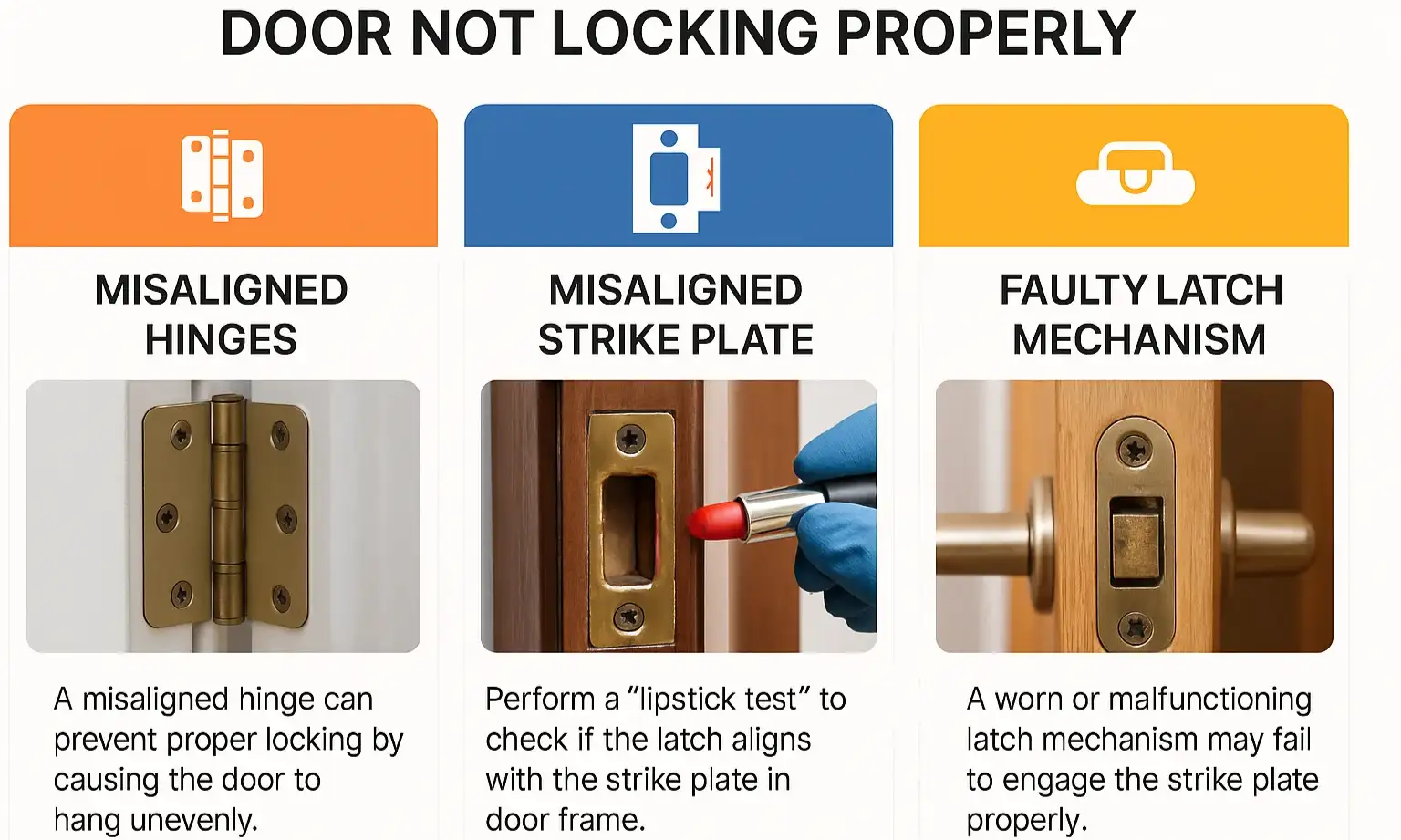
Before applying any fix, identify why your key won’t turn. Not every jam is due to dryness. Misdiagnosis can make things worse when a key not turning in lock occurs.
Key Stuck? Check These Causes
Misaligned Door or Frame
If your door has shifted due to humidity or settling, the latch may be under pressure. This makes the key hard to turn even if the lock is fine.
Test it: Try opening the door slightly while turning the key. If it turns easily when the door is ajar, the issue is alignment.
Fix: Adjust the strike plate or call a carpenter to realign the frame properly.
Damaged or Worn Key
Keys wear down over time and lose their ability to engage pins correctly. A bent or overly worn key won’t work regardless of lubrication.
Check it: Compare it to a spare key. If one is visibly smoother or bent, that is your culprit.
Fix: Replace the key. Do not lubricate a damaged key as it won’t solve the root issue.
Broken Internal Components
If the key turns but the bolt doesn’t move, the problem is inside the lock mechanism.
Signs:
– Key spins freely
– No resistance felt
– Bolt doesn’t retract
Solution: The lock needs replacement. Lubricants won’t help mechanical failure inside the cylinder.
Avoid Common Mistakes
Even with the right fix, people make errors that worsen the problem. Avoid these pitfalls when dealing with a key not turning in lock.
Forcing the Key
Never force a stuck key. You risk breaking the key in the lock or damaging internal pins. Instead, back out gently and try lubrication first.
Using Too Much Lubricant
Over-spraying can push debris deeper or create sticky buildup inside the mechanism.
Use sparingly: One short burst is enough. More isn’t better for your lock.
Choosing the Wrong Lubricant
Avoid cooking oil, WD-40, and silicone spray for this specific task. Cooking oil attracts grime and turns rancid. WD-40 causes long-term issues. Silicone spray is better than oil but still not ideal. Stick to graphite powder or lock-specific dry lube.
Prevent Future Lock Jams

A smooth-turning key starts with regular maintenance of your home security.
Clean the Lock Monthly
Use a dry toothbrush to gently scrub around the keyhole. Remove dust, lint, or pocket debris that sneaks in over time.
Lubricate Every 6 to 12 Months
Set a reminder for spring and fall for exterior locks. Interior locks only need this once a year. Use three-in-one dry lube for best protection against wear.
Keep Spare Keys
Store a new, unused spare in a safe place. Old keys wear out, so having a fresh one ready prevents emergencies.
When to Call a Locksmith
Some issues cannot be DIY-fixed safely at home.
Call a Pro If:
- The key breaks off inside the lock
- The lock cylinder spins but won’t catch
- Multiple keys fail to turn
- You’ve tried all three fixes with no success
These signs point to internal damage or security tampering. A locksmith can extract broken keys, rekey the lock, or install a new one safely.
Frequently Asked Questions About Key Not Turning in Lock
Can I use WD-40 if my key won’t turn?
No, you should avoid using WD-40 on locks. It is a water displacer that leaves a sticky residue, which attracts dust and grime over time. This buildup eventually causes more jams rather than solving the problem.
How often should I lubricate my door locks?
You should lubricate your locks every 6 to 12 months for optimal performance. Exterior locks in humid or dusty environments benefit from treatment every six months to prevent sticking.
Why does my key turn but the door won’t open?
If the key turns but the door won’t open, the issue is likely a misaligned door frame or a broken internal component. The lock mechanism itself may be functioning, but the bolt cannot retract due to pressure or breakage.
Is pencil graphite safe for all lock types?
Yes, standard graphite from a number 2 pencil is safe for all metal locks. It is a natural dry lubricant that does not attract dirt, making it suitable for house locks, car locks, and padlocks.
What should I do if my key breaks in the lock?
Do not try to push the broken piece further in. Use tweezers or a broken key extractor tool if available. If you cannot remove it gently, call a professional locksmith to avoid damaging the cylinder.
Key Takeaways for Fixing a Key Not Turning in Lock
A key not turning in lock is usually a simple fix if you act correctly. Start with saliva for emergencies, use pencil graphite for a quick dry fix, and apply three-in-one lock dry lube for lasting results. Always diagnose the cause first to ensure you are treating the right problem.
Avoid forcing the key or using the wrong lubricants like WD-40. Regular maintenance every six months keeps your locks responsive and extends their lifespan. With these steps, you will save time, money, and stress every time you turn the key.