Staring at a stubborn numeric lock with a forgotten code creates instant frustration for anyone trying to access their gear. Whether it is a gym locker or a travel bag, learning how to open a numeric lock saves time and prevents damage to your property.
This guide details exact steps to bypass forgotten codes using tension and feel techniques. You will discover how to reset changeable models and identify the precise moment internal wheels align to release the shackle.
Execute the Correct Opening Sequence
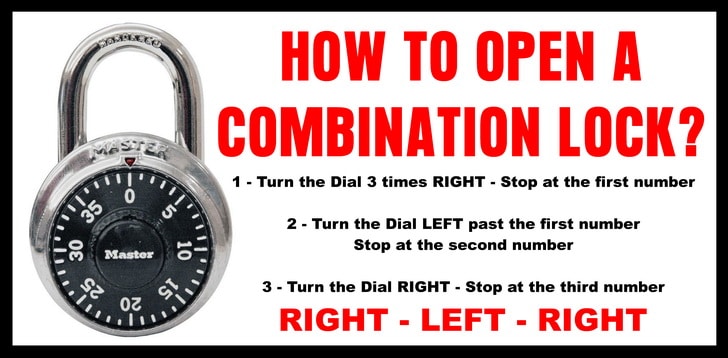
Even with the right numbers, a single error in direction prevents the lock from opening. Most standard locks require a strict rotational pattern to align internal gates properly.
Follow the Three-Step Turn Protocol
Standard three-number locks demand a specific directional sequence. Deviating from this pattern resets the internal mechanism instantly.
-
Spin Right Three Times
Turn the dial clockwise three full rotations. This clears previous attempts and resets internal wheels. Stop on the first number as it passes the top marker on the fourth pass. -
Turn Left Past the Second Number
Rotate counterclockwise and pass the second number once completely. Stop exactly on that number during the second encounter at the marker. Skipping this rule causes most user failures. -
Turn Right Directly to the Third Number
Turn clockwise directly to the third number without making a full rotation. Align it with the marker and pull the shackle immediately to open.
Verify Alignment and Tension
If the lock remains stuck, check your alignment precision. Each number must sit exactly on the reference line.
- Ensure numbers are not between marks.
- Apply gentle upward tension on the shackle while turning.
- Restart the entire sequence if the first number was missed.
Bypass Locks Using Tension and Feel
When the combination is lost, tension manipulation becomes your most effective non-destructive tool. This method exploits tiny mechanical imperfections inside the lock body.
Apply Constant Shackle Tension
Pull the shackle upward firmly and maintain steady pressure throughout the process. This friction allows you to feel when internal wheels align correctly.
- Use your non-dominant hand to pull the shackle up.
- Use your dominant hand to rotate the dial slowly.
- Keep tension strong enough to create resistance but not jam the dial.
Detect the Loose Spot on Each Dial
Rotate each dial slowly while maintaining upward pressure on the shackle. Watch for a sudden drop in resistance or a “bumpy” feeling that smooths out.
- Listen for a faint click or feel a micro-shift in the shackle.
- Note the number where the dial feels loosest or dips slightly.
- Mark this number as the likely correct digit for that wheel.
Repeat for All Dials in Sequence
Identify one correct number then move to the next dial in the series. The overall resistance often decreases as more wheels align properly.
- Try numbers adjacent to your feel point if the lock stays stuck.
- Manufacturing variances can shift the true number by one digit.
- The shackle may wiggle freely once all digits are set correctly.
Open 3-Dial and 4-Dial Padlocks

Multi-dial padlocks found on luggage operate on similar alignment principles. These locks often have looser tolerances making them easier to manipulate by hand.
Use Tension to Find Each Digit
Apply upward pressure on the shackle and rotate the leftmost dial slowly. When it turns more freely, note the number and proceed to the next dial.
- For 3-dial locks, find the loose point on left, middle, then right dials.
- For 4-dial locks, start with the dial showing the most resistance.
- Example results often look like 7-2-9 or 1-8-0-5.
Reset the Lock After Opening
Write down the discovered combination immediately after the shackle pops open. Close the shackle and scramble the dials to relock the device securely.
- Rotate dials randomly before storing to prevent sticking.
- Return dials to zero for consistency if preferred.
- Test the new code before securing valuable items inside.
Try Common Default Combinations
Many users select predictable codes out of convenience. Testing high-probability defaults saves time before attempting advanced bypass techniques.
Test These First
Try these combinations in order as they appear frequently on new locks. Human nature often leads to simple repeating patterns or sequences.
- 0-0-0
- 1-2-3
- 9-9-9
- 1-1-1
- 2-2-2
- 1-2-0
Use Logical Brute Force
If defaults fail, use a systematic approach starting from 0-0-0. Increment the last digit first, then the middle, then the first digit.
- A 3-dial lock has only 1,000 possible combinations.
- This method guarantees success eventually though it takes time.
- Eliminate obvious patterns first to reduce total attempts needed.
Reset a Changeable Combination Lock
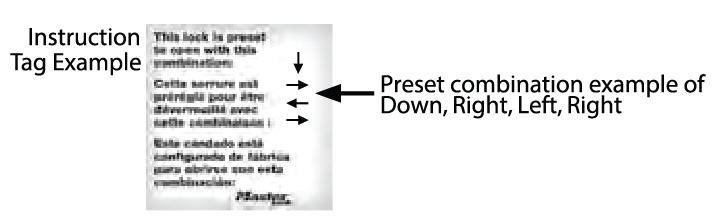
Some models allow reprogramming but only when the lock is already open. Check your specific model for reset capabilities before proceeding.
Locate the Reset Mechanism
Look for a small pinhole on the back or a slider switch on the side of the lock body. Some models require twisting the shackle ninety degrees.
- Common resettable models include Master Lock 1500iD and 175 series.
- Most TSA-approved luggage locks feature a reset button.
- Use a paperclip to press hidden reset pins deeply.
Set a New Combination
Open the lock with the current code before attempting any changes. Press and hold the reset button while turning dials to your desired new code.
- Open the lock with the current code.
- Press and hold the reset button with a paperclip.
- Turn the dials to your desired new code.
- Release the button to lock in the new sequence.
- Scramble and test the new code immediately.
Handle Non-Resettable and Antique Locks
Vintage locks or non-resettable models require different handling strategies. These devices often lack modern reset features entirely.
Non-Resettable Locks: Bypass or Break
If the code is lost on a non-resettable unit, tension methods are your only non-destructive option. Failure here means destructive entry is required.
- Use the tension method to find the current combination.
- Accept that some factory codes cannot be changed ever.
- Prepare for destruction if bypass attempts fail completely.
Open a 5-Dial Chinese Brass Lock
These antique locks use rotating barrels with internal gaps instead of standard wheels. Alignment requires extreme patience and light touch.
- Apply light upward tension on the shackle gently.
- Rotate each dial slowly to feel for a drop in resistance.
- The lock becomes progressively looser as gaps align.
- The final dial releases the shackle with a distinct click.
Break the Lock as a Last Resort
Destruction becomes necessary when bypass fails and contents are urgent. This approach permanently ruins the lock but grants immediate access.
Cut the Shackle with Bolt Cutters
Heavy-duty bolt cutters work best on soft-metal padlocks. Position the jaws around the shackle near the lock body for maximum leverage.
- Apply firm pressure to shear the metal quickly.
- Wear safety glasses to protect eyes from flying metal fragments.
- Ensure you own the lock or have explicit permission first.
Alternative Tools
Angle grinders handle hardened steel shackles that bolt cutters cannot slice. Hammers and chisels work but create significant noise and mess.
- Use a Dremel tool with a metal wheel for precision cutting.
- Strike the shackle base with a hammer if tools are limited.
- Expect permanent damage to the lock body during this process.
Prevent Future Lockouts
Smart habits and better hardware choices reduce the risk of future access issues. Upgrading your security mindset prevents repeated frustrations.
Choose Harder-to-Bypass Locks
Upgrade from basic combination locks to high-security padlocks with anti-manipulation shields. Keyed locks with pick-resistant pins offer better protection.
- Electronic locks provide audit trails for high-value use cases.
- Avoid cheap zinc or plastic-bodied locks that wear quickly.
- Select models with tighter internal tolerances for better security.
Practice Good Code Hygiene
Never use birthdays or simple sequences like 1-2-3 for your codes. Use a random number generator to create unpredictable combinations.
- Store combinations in a password manager securely.
- Keep a locked notebook with codes away from the lock itself.
- Change default codes immediately upon purchasing new locks.
Frequently Asked Questions About Numeric Locks
Can I open a numeric lock without the combination?
Yes, you can often open these locks using tension and feel techniques. By applying upward pressure and rotating dials slowly, you can detect when internal wheels align. This method works best on standard mechanical locks with loose tolerances.
What is the default code for most luggage locks?
Most luggage locks come set to 0-0-0 from the factory. Users should change this immediately after purchase for better security. Other common defaults include 1-2-3 or 9-9-9.
How many combinations does a standard 3-dial lock have?
A standard 3-dial lock with numbers 0 to 39 has 64,000 possible combinations. Locks with digits 0 to 9 have only 1,000 combinations. This difference affects how long brute force methods take to succeed.
Why won’t my lock open with the correct combination?
Misalignment or incorrect turning sequence usually causes this failure. Ensure you pass the second number once before stopping on it during the counter-clockwise turn. Check that each number aligns exactly with the reference marker.
Can I reset my combination lock if I forgot the code?
No, you must know the current code to reset a changeable lock. The reset mechanism only engages when the lock is in the open position. If the code is lost, you must bypass or destroy the lock first.
Is it legal to open a lock I don’t own?
No, opening a lock without owner permission is illegal in most jurisdictions. These techniques should only be used on your own property or with explicit consent. Unauthorized access can lead to criminal charges.
Key Takeaways for Opening Your Numeric Lock

Mastering how to open a numeric lock relies on understanding mechanical alignment and applying consistent tension. Remember that precise directional turns and tactile feedback are your best tools for recovering access without damage.
Always attempt non-destructive methods like tension manipulation before considering destruction. Upgrade to high-security hardware for valuable items and record your combinations in a safe place to prevent future lockouts.