You are standing outside your home with the door clicked shut and your keys missing. Panic sets in until you remember you might be able to open a locked door with a card. This simple trick works on specific latch types and can save you from calling a locksmith.
This guide explains exactly how to open a lock door with a card using items you already have. You will learn which doors respond to this method and the precise steps to retract the latch safely. Let us get you back inside without causing any damage to your property.
Identify If Your Door Lock Is Compatible

Success depends entirely on the type of locking mechanism installed on your door. You must verify the hardware before attempting any entry technique.
Distinguish Between Latch Bolts and Deadbolts
Only spring-latch locks respond to the credit card method. These are standard doorknob locks that engage automatically when the door closes. You can identify them by the angled edge on the metal bolt that slides into the frame.
Deadbolts feature a straight metal bar that extends deep into the frame. These cannot be bypassed with a card because there is no slant to push against. If your door has a separate keyhole above the knob, this method will fail.
Inspect the Door Gap for Clearance
Stand facing the door and look closely at the seam between the door edge and the frame. You need a visible space to insert your tool.
- ✅ Ideal gap: About 1/16 to 1/8 inch allows card insertion.
- ❌ Too tight: No visible space means the card will not fit.
- 🔍 Check alignment: Warped doors often have uneven gaps.
If light shines through the crack or you can slide a piece of paper in, you have enough room to proceed.
Select the Best Card for the Job
You do not need specialized locksmith tools to perform this task. A common plastic card often works perfectly if you choose the right one.
Choose Flexible Yet Rigid Plastic
- Best option: Thin sample credit cards sent via mail offers.
- Good option: Standard plastic credit cards without cracks.
- Avoid: Stiff driver licenses or heavily damaged cards.
The ideal card bends slightly to navigate the frame but remains strong enough to push the latch back.
Prepare a Backup Plan
Plastic cards can crease or snap under pressure during the attempt. If you use your primary bank card:
- Bring a spare card just in case.
- Know that most banks replace damaged cards for free.
Using an old gift card or library card reduces the risk of damaging your primary financial tools.
Apply Body Pressure to Create Space
This step is critical because the latch stays flush against the frame without proper pressure. You must create room for the card to enter.
Lean Firmly Into the Door
Stand close to the door and use your hip or shoulder to push inward near the handle. This action pulls the latch slightly away from the strike plate inside the frame.
- Hold this position throughout the entire process.
- Releasing pressure closes the gap immediately.
- Keep your hands free to manipulate the card.
Maintaining constant pressure ensures the gap remains open for your tool.
Keep Hands Free for Precision
Use your body weight rather than your hands to maintain the inward push. This technique frees both hands to guide the card smoothly into the narrow gap.
Insert the Card at the Correct Angle
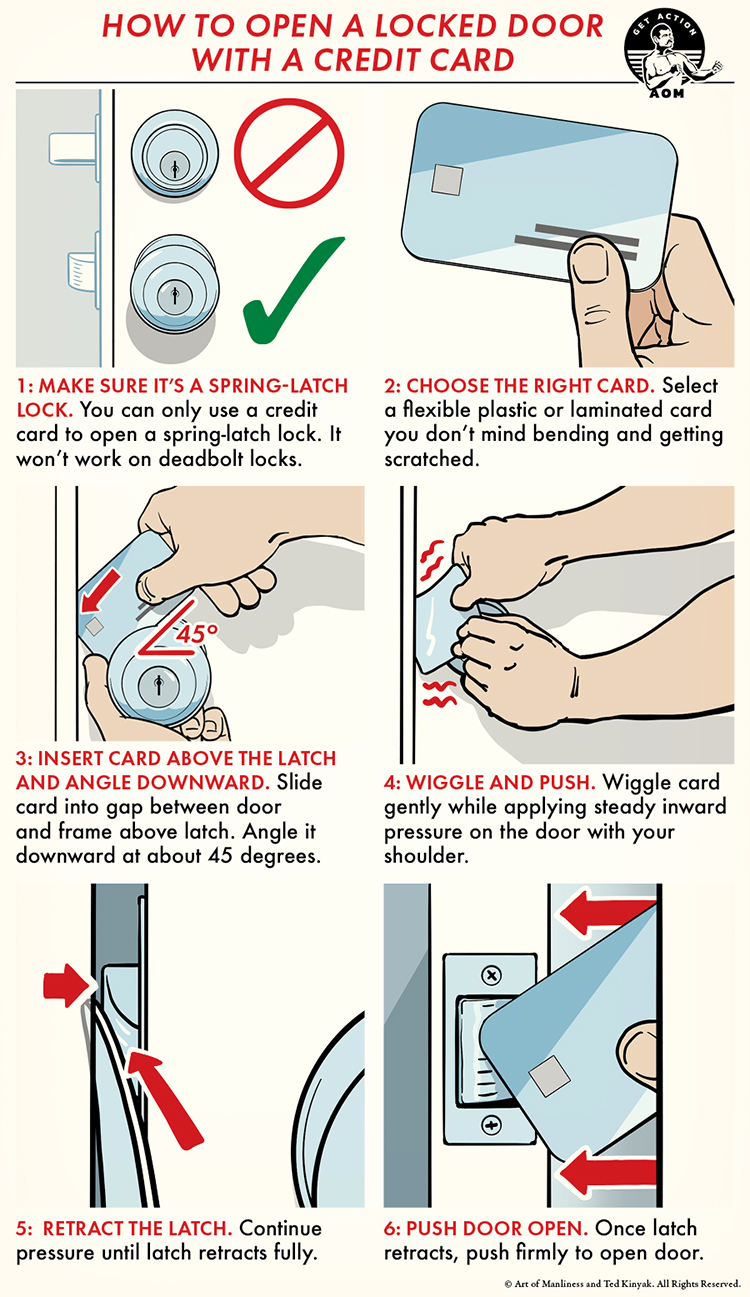
Precision determines success. Inserting the card at the wrong angle causes it to slide past the locking mechanism entirely.
Slide the Corner Parallel to the Knob
Hold the card vertically and insert the top corner into the gap just above the latch. Aim behind the slanted edge of the bolt while keeping the card flat against the frame.
- Push the card in slowly and steadily.
- Reposition slightly higher or lower if you feel resistance.
- Ensure the card goes between the door and the frame.
If the top approach fails, try inserting the bottom corner below the latch instead.
Avoid Forcing the Card Inside
Do not jam the card if it meets resistance. Forcing it can tear the plastic edge or damage the door finish.
- Pull back gently and adjust your angle.
- Try wiggling the card slightly while pushing.
- Switch to the opposite side of the latch if needed.
Sometimes the alignment favors one side over the other depending on door installation.
Work the Card to Retract the Latch
Now you must manipulate the internal mechanism to release the lock. This requires a specific motion to disengage the bolt.
Move the Card Downward with Pressure
Once the card sits behind the latch, apply gentle downward pressure while pushing inward. Wiggle the card slightly to help it ride the slanted edge of the bolt.
- The goal is to push the bolt back into the door body.
- Maintain steady inward pressure on the door.
- Feel for the latch sliding back smoothly.
As the card pushes the slant, the bolt retracts and the door unlocks.
Feel for the Latch Release Signal
You will notice a distinct “give” or soft click when the latch retracts. The door will begin to open slightly on its own.
- Stop pushing the card once you feel this release.
- Turn the doorknob with your other hand immediately.
- Swing the door open before the latch re-engages.
Common Mistake: Twisting the Handle Too Soon
Do not turn the knob until you feel the latch fully retract. Twisting too early causes the latch to jam against the card.
- Wait for the distinct release sensation.
- Ensure the bolt is fully inside the door.
- Then turn the handle to open.
Patience prevents the card from slipping out prematurely.
Troubleshoot When the Card Fails

Sometimes the first attempt does not work due to alignment or tool issues. Here is how to fix common problems.
Problem: Card Slides Past the Latch
Cause: The card entered the gap too deeply without catching the bolt mechanism.
Fix:
* Insert the card more slowly and deliberately.
* Start higher above the latch and angle downward.
* Use a thicker card for better control and feedback.
Problem: Latch Won’t Retract
Cause: The door fit is too tight or the strike plate is recessed deeply.
Fix:
* Increase body pressure to widen the gap further.
* Try a thinner card like a hotel key or sample offer.
* Apply dry graphite lubricant if the latch feels sticky.
Problem: Door Has No Visible Gap
Cause: Modern energy-efficient doors often have very tight seals.
Fix:
* Use a guitar pick to create initial space first.
* Insert the pick, then slide the card behind it.
* Work the card in gradually while maintaining pressure.
Know the Limitations of This Method

This technique is not a universal solution for every locked door. Understanding its boundaries prevents wasted effort and potential damage.
Doors That Will Not Work
- 🔒 Deadbolts: The straight bolt offers no slant to push.
- 🏢 Commercial steel doors: Tight seals block card insertion.
- 🚪 Outward-opening doors: The latch faces away from you.
If your door falls into these categories, do not attempt this method.
Reduced Effectiveness on Modern Locks
Newer hardware often includes features designed to prevent this exact bypass.
- Tighter manufacturing tolerances leave no room.
- Anti-slam latches lack the necessary angled edge.
- Security strike plates have shields that block cards.
If your home has updated security hardware, this method likely will not succeed.
Prevent Future Lockouts

Avoid the stress of being locked out by adopting smarter access habits today.
Hide a Spare Key Securely
- Use a magnetic key holder under a metal surface like a car frame.
- Place a key inside a fake rock in your garden.
- Never leave keys under the doormat where thieves look first.
Secure hiding spots ensure you always have a backup option.
Store a Backup Card
Keep a spare plastic card in strategic locations for emergencies.
- Store one in your wallet separate from your main cards.
- Keep another in your car glove compartment.
- Place one in your everyday bag or backpack.
Label it “Emergency Door Card” so you recognize its purpose instantly.
Upgrade to a Smart Lock
For long-term convenience, consider modernizing your entry system.
- Install a keyless entry pad for code access.
- Use a smart lock with fingerprint or app control.
- Set up temporary codes for guests or service workers.
These upgrades eliminate the need for physical keys or cards entirely.
When to Call a Professional
Do not risk injury or property damage if the situation becomes difficult. Knowing when to stop is just as important as knowing how to start.
Call a Locksmith If:
- The door has a deadbolt or high-security lock.
- Multiple attempts with the card have failed.
- Your card keeps bending or breaking during the attempt.
- You are located on a second floor or require a ladder.
A professional can open the door quickly without causing harm.
Emergency Situations
If a child, pet, or person is locked inside and in distress:
- Call emergency services immediately.
- Do not attempt risky methods like breaking glass yourself.
Safety always takes priority over saving money on a service call.
Frequently Asked Questions About Opening Locked Doors
Can I open a deadbolt with a credit card?
No, you cannot open a deadbolt with a card. Deadbolts have a straight metal bar that extends deep into the frame without an angled edge. The card method only works on spring-loaded latches with a slanted surface.
Will using a card damage my door or lock?
Usually, this method causes no damage if done correctly. However, forcing a thick card or using excessive pressure can scratch the door finish or bend the latch. Using a flexible sample card reduces this risk significantly.
What type of card works best for this trick?
Thin, flexible plastic cards work best for this task. Sample credit cards from mail offers are ideal because they are durable yet pliable. Avoid using stiff ID cards or valuable bank cards that could snap.
Is it legal to open a door with a card?
It is legal only if you are opening your own property or have explicit permission from the owner. Using this technique to enter a home or building that does not belong to you is illegal and considered breaking and entering.
Why does the card slide past the latch without opening the door?
This happens when the card misses the angled part of the bolt. You may need to adjust your angle, start higher above the latch, or apply more body pressure to create a larger gap for better access.
Key Takeaways for How to Open a Lock Door with a Card
Learning how to open a lock door with a card is a valuable skill for minor lockouts involving spring latches. Remember that success requires a visible gap, a flexible card, and steady body pressure to retract the bolt. Always verify your lock type first, as deadbolts and modern security features will not respond to this method.
If you find yourself locked out frequently, invest in a spare key system or upgrade to a smart lock for peace of mind. Practice this technique on your own interior doors when you are not locked out to build confidence and muscle memory. Stay prepared and prioritize safe, legal entry methods at all times.