You are locked out with the deadbolt engaged and no key in sight. Knowing how to open a bolt lock without causing damage saves time, money, and significant stress during an emergency.
This guide details two professional methods: the Spin-Open Technique and the Ice Pick Attack. You will learn the specific tools, step-by-step execution, and safety checks required for each approach.
Assess the Lock Before Attempting Entry
Your strategy depends entirely on the physical construction of the door and lock. Inspect the hardware carefully before applying any tools or force.
Check for Interior Guards
Look at the inside of the door around the cylinder. A metal plate or shield indicates a high-security model. This guard blocks access to internal mechanisms and causes the Ice Pick Attack to fail immediately.
Examine Mounting Screws
Standard deadbolts use two short screws from the interior to secure the cylinder. Long screws often anchor into a reinforced frame. These resist displacement and make forcible attacks ineffective against the lock body.
Test Door Material
Solid-core wood or steel doors handle force better than hollow-core versions. Even solid wood can crack under pressure if mounted into a dense frame. Never assume strength without evaluating the material first.
Pro Tip: If you do not own the property, stop here and call a locksmith. Unauthorized entry may violate local laws.
Use the Spin-Open Technique for High-Security Locks
This method is ideal for deadbolts with spool pins that resist traditional picking. It uses momentum rather than precise pin alignment to bypass security features.
Why Standard Picking Fails Here
Modern deadbolts often use spool or mushroom pins that bind when tension is applied normally. These pins create false feedback that makes the lock feel picked when it is not. The Spin-Open Technique bypasses this by using rapid motion.
Apply Clockwise Tension First
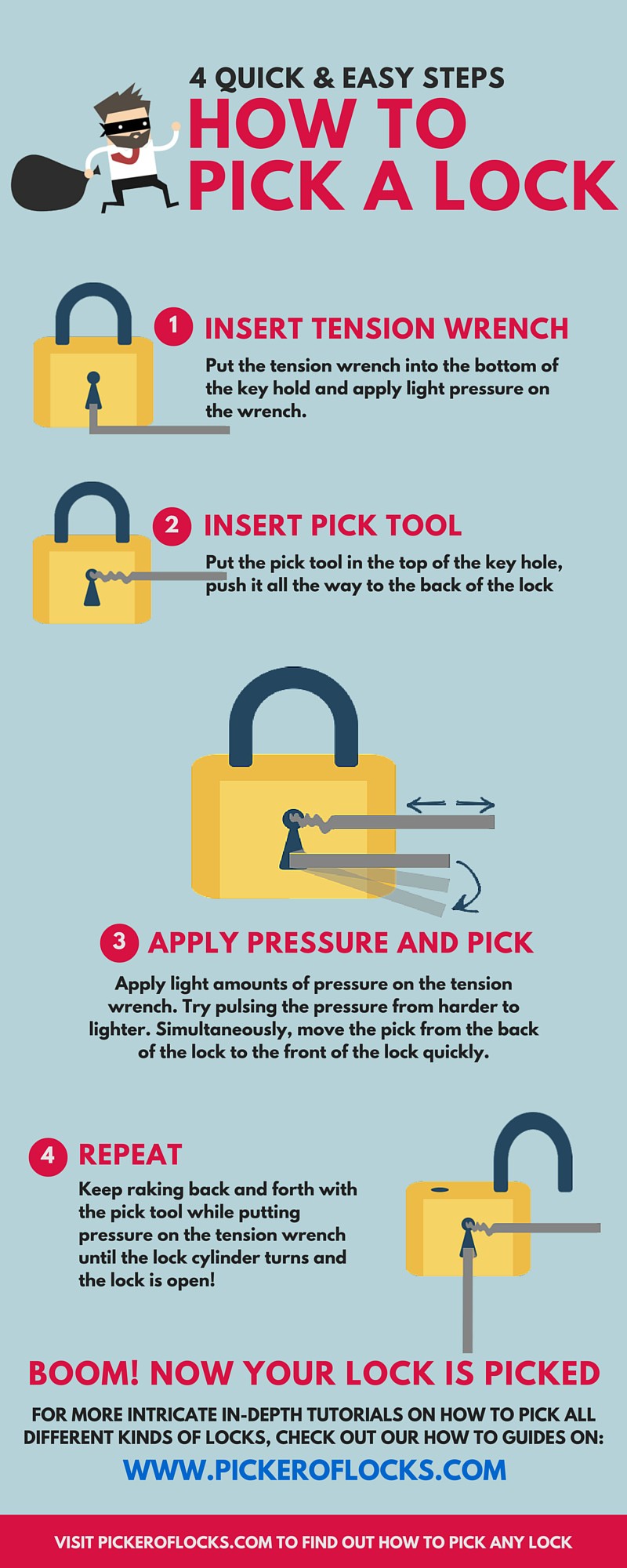
Insert a tension wrench into the bottom of the keyway. Turn it clockwise, which is the “wrong” direction for opening.
- Light locks need light tension.
- Heavy-duty models require firm pressure.
- Goal: Engage all pins without jamming them at the shear line.
This counterintuitive move sets the stage for bypassing security pins effectively.
Insert Upside-Down Diamond Pick
Use a spring steel diamond pick inserted upside down into the keyway. With heavy tension applied, push all pins upward to the shear line.
- Focus on top pins first as spools hang up easiest.
- Rake downward slowly while easing tension.
- Watch for the plug to turn slightly clockwise.
That slight movement signals that the pins are set correctly for the next step.
Fine-Tune with a Lifter Pick
Switch to a hook or lifter pick to adjust individual pins. Feel for binding pins and lift each just until tension releases slightly.
- Maintain consistent clockwise pressure throughout.
- Your goal is a partial turn, not full rotation.
- This positions the plug perfectly for the spin tool.
Insert the Spin-Open Tool
Place a specialized spin tool into the keyway. It must seat firmly against the plug with no wobble or slippage. Ensure full contact with the cylinder while maintaining clockwise tension.
Spin Counterclockwise Rapidly
Push or pull the door lightly to simulate key-induced bolt pressure. Then flick the spin tool fast counterclockwise.
- Speed matters because momentum pulls the bolt back before pins re-engage.
- A successful spin opens the lock instantly.
- If it sticks, the pins reseated, so reset and try again.
Expert Note: This is not a slow turn. It must be a snap like cracking a whip to work effectively.
Restore Normal Function
Reinsert the original key and turn it to the upright position. Test locking and unlocking to ensure the mechanism was not damaged. You have bypassed the lock rather than broken it.
Try the Ice Pick Attack on Standard Deadbolts

This method works best on standard residential deadbolts with no interior guard. It exploits mechanical weaknesses in the mounting hardware.
Confirm Vulnerability First
This method only works if no metal guard covers the cylinder interior. The lock must use only two standard screws, and the door should be hollow-core or standard solid wood. Skip this method if any condition fails.
Strike the Top of the Cylinder
On the inside of the door, locate the top of the deadbolt cylinder. Use an ice pick or flathead screwdriver positioned on the upper edge.
- Strike firmly with a hammer or palm.
- Goal: Force the cylinder down slightly.
- Result: A crescent-shaped gap appears at the top of the faceplate.
Warning: Do not overstrike. Cracking the door ruins the non-destructive advantage of this method.
Create a Crescent Gap
Look for a small opening between the cylinder and the door surface after impact. A gap as small as 1/16 inch at the top of the lock is sufficient. This gap exposes the internal release mechanism needed for entry.
Insert a Thin Pick
Grab a thin, flexible pick available at hardware stores. Slide it through the gap and angle it downward behind the faceplate.
- Feel for a horizontal bar or lever on the cylinder top.
- This is the internal retraction tab.
- It controls bolt movement directly.
Pull Toward the Hinge Side
Hook the tab with your pick firmly. Pull it from the latch side toward the hinge side of the door.
- Motion mimics turning the key inside the lock.
- The bolt should retract immediately.
- The door opens once the bolt clears the frame.
Pro Tip: Use a pick with a curved end for better hooking leverage on the internal tab.
Reset the Cylinder
Once inside, push the cylinder back up flush with the door. Tighten the mounting screws if they feel loose. Re-lock with the key to verify operation and ensure no visible damage remains.
Know When to Switch Tactics
Both methods have hard failure points that require immediate recognition. Persisting with a failing method wastes time and risks damage.
Spin-Open Fails: What Now?
Common reasons for failure include pins re-engaging during the spin or incorrect tension levels. Some locks use anti-spin designs with rotating pins that prevent this technique entirely.
Solutions:
* Increase spin speed significantly.
* Adjust tension incrementally up or down.
* Try lighter raking before the final spin attempt.
If still stuck, move to conventional picking or call a locksmith for assistance.
Ice Pick Fails: Guard or Strong Mounting?
If the cylinder does not drop, a protective guard is likely present. Screws may be extra-long or reinforced, or the door material is too dense to allow displacement.
Do not keep striking. The risk of wood cracking increases with every missed hit.
Switch to Plan B:
* Use a Halligan bar or crowbar on the frame.
* Focus leverage on the strike plate or jamb.
* Apply force near the bolt tip to break the frame.
This is destructive but necessary when bypass attempts fail completely.
Choose the Right Tools for Success
Success hinges on having quality equipment designed for these specific tasks. Poor tools lead to frustration and potential lock damage.
Essential for Spin-Open
| Tool | Purpose | Specs |
|---|---|---|
| Tension Wrench | Apply rotational pressure | Sturdy, non-slip grip |
| Diamond Pick | Rake pins under tension | Spring steel, upside-down use |
| Lifter Pick | Set individual pins | Fine tip, precise control |
| Spin-Open Tool | Execute rapid turn | Secure keyway fit |
Keep picks clean and unbent. Damaged tips give false feedback during manipulation.
Required for Ice Pick Method
| Tool | Purpose | Specs |
|---|---|---|
| Ice Pick or Flat Screwdriver | Strike cylinder | Sharp, durable tip |
| Hammer or Impact Source | Deliver force | Controlled strike |
| Thin Pick | Hook internal tab | Flexible, curved end |
Hardware store alternatives work for occasional use. Invest in professional versions for repeated applications.
Prevent Future Lockouts
Avoid repeating this situation by upgrading your security setup. Better hardware prevents these bypass methods from working on your own doors.
Upgrade Your Lock Setup
- Install deadbolts with interior guards to block Ice Pick attacks.
- Use 3-inch mounting screws anchored deeply into wall studs.
- Add secondary entry methods like a keyless pad or smart lock.
Practice Responsibly
If learning for preparedness, practice on a removed lock or old door. Never attempt these techniques on property you do not own. Understanding local laws on lock bypass is essential for ethical practice.
Frequently Asked Questions About Opening Bolt Locks
Can I open a bolt lock without damaging it?
Yes, the Spin-Open Technique is non-destructive if executed correctly. It manipulates internal pins without breaking components. The Ice Pick Attack can also be non-destructive if the cylinder resets perfectly.
What tools do I need to open a deadbolt quickly?
You need a tension wrench, diamond pick, lifter pick, and spin tool for the Spin-Open method. The Ice Pick method requires an ice pick, hammer, and thin flexible pick.
Why does my lock not open with standard picking?
Security pins like spools or mushrooms bind when tension is applied normally. These features are designed to stop traditional picking. The Spin-Open Technique bypasses this by using momentum.
Is the Ice Pick Attack legal to use?
Only use these methods on locks you own or have explicit permission to open. Unauthorized entry violates laws in most jurisdictions. Always verify ownership before proceeding.
What if both methods fail to open the door?
If both fail, the lock likely has advanced guards or reinforced mounting. Transition to conventional forcible entry tools like crowbars targeting the door frame. Call a professional if unsure.
Key Takeaways for Opening Your Bolt Lock
Knowing how to open a bolt lock provides a critical solution for emergency lockouts. The Spin-Open Technique defeats high-security pins with speed, while the Ice Pick Attack exploits mounting weaknesses in standard locks.
Always assess the lock for guards and screw length before choosing a method. Use the right tools and apply precise force to avoid damaging your door.
Start by inspecting your own locks today to understand their vulnerabilities. Upgrade hardware where necessary to prevent future bypass attempts on your property.