A stiff key or squeaky door lock often signals internal grime buildup rather than total failure. Ignoring this warning can lead to seized pins and expensive repairs before you even realize the damage.
You can fix this issue quickly by learning how to lubricate a lock using the correct dry products and techniques. This guide explains exactly which lubricants work, how to apply them safely, and what common mistakes to avoid.
Select the Correct Lubricant for Your Lock Type

Choosing the right product is the most critical step in the process. Using the wrong substance can turn a minor annoyance into a permanent mechanical failure.
Why Graphite Powder Often Fails Modern Locks
Graphite powder was once the standard recommendation, but it has significant downsides in many environments. It tends to clump over time and mix with dust to create an abrasive paste that wears down internal pins. In humid conditions, graphite absorbs moisture and becomes conductive, which can cause corrosion inside the metal components.
Benefits of PTFE-Based Dry Lubricants
Lubricants containing polytetrafluoroethylene (PTFE) are the superior choice for most applications. These sprays repel moisture effectively and do not attract dirt or dust particles. They leave behind a smooth, dry film that allows pins and springs to glide effortlessly without gumming up.
Dangers of Using Oil-Based Household Sprays
Never use WD-40, vegetable oil, or motor oil to lubricate a lock mechanism. These oils break down over time and leave a sticky residue that traps sand and dust particles. This mixture creates a grinding paste that accelerates wear on your pins and springs while offering no lasting protection.
Prepare the Lock Cylinder Before Application
Proper preparation ensures the lubricant reaches the internal components without pushing debris deeper inside.
Clear Debris from the Keyway Entrance
Use a soft-bristled brush like an old toothbrush to sweep away visible dirt around the keyhole. You can also use compressed air or a dry pipe cleaner to blow out loose particles from deep within the cylinder. Avoid using metal tools that might scratch the internal surfaces or damage the pins.
Test Key Movement to Identify Resistance Points
Insert and remove your key several times to feel where the resistance occurs. Note if the stickiness happens at entry, during the mid-turn, or at full rotation. This observation helps you determine if the issue lies in the keyway, the cylinder, or the bolt mechanism itself.
Clean the Key Surface Thoroughly
Dirt and old lubricant on your key can contaminate the clean lock cylinder immediately after you service it. Wipe the key down with rubbing alcohol and a lint-free cloth before inserting it for testing or lubrication.
Apply Lubricant Using Proper Technique
Correct application ensures even coverage while preventing excess product from attracting future debris.
Utilize a Precision Applicator Nozzle
Most quality lock lubricants come with a thin straw or needle-tip nozzle for precise delivery. Insert this tip directly into the keyway and spray lightly for just one to two seconds. Using too much lubricant can cause pooling, which attracts dirt and creates the very problem you are trying to solve.
Work the Key to Distribute the Product
Insert and remove the key five to ten times to spread the lubricant throughout the entire cylinder. Turn the key fully each time to ensure all pins and tumblers receive coverage. If the lock feels very stiff, pause for a few minutes to let the lubricant penetrate before continuing the motion.
Lubricate the Bolt and Latch Mechanism
For door locks, you must also address the moving parts beyond the key cylinder. Extend the bolt manually or turn the handle to expose the latch, strike plate, and spring areas. Apply a small amount of lubricant to these parts to reduce friction across the entire locking system.
Troubleshoot Persistent Lock Problems
Some locks may still exhibit issues even after you have applied lubricant correctly.
Addressing Stiffness After Lubrication
If the lock remains hard to turn, internal damage or misaligned pins might be the cause. Reapply the lubricant and let it sit for 10 to 15 minutes to penetrate deeper. If no improvement occurs, you may need a professional to disassemble and inspect the unit.
Fixing Keys That Turn Without Retracting the Bolt
This symptom points to a mechanical failure outside the cylinder, likely in the linkage between the knob and bolt. Lubricate the internal mechanism thoroughly and check for loose screws or bent parts that prevent proper engagement.
Preventing Locks from Freezing in Winter
Moisture inside the lock can freeze solid and block key insertion during cold weather. Use a de-icing lubricant, often silicone-based, to displace water and prevent ice formation. Covering the lock with a weatherproof cap provides an extra layer of protection against the elements.
Establish a Regular Maintenance Schedule
Preventative care keeps your locks functioning smoothly for years and prevents emergency situations.
Lubricate Exterior Locks Every Six Months
High-use and exterior locks require lubrication twice a year for optimal performance. Apply lubricant once before winter arrives and again in the spring to combat seasonal changes. Indoor locks generally need less frequent attention, often lasting up to a year between services.
Recognize Early Warning Signs of Failure
Squeaks, increased resistance, or inconsistent key turning are early indicators of dryness. Address these signs immediately to avoid complete lock failure when you need access most. Ignoring these small signs often leads to a stuck key at the worst possible time.
Keep Keys and Cylinders Free of Grime
Regularly clean your keys with alcohol and inspect them for signs of wear or bending. Worn keys can damage the delicate pins inside the cylinder and significantly reduce the lifespan of your lock.
Handle Special Lock Types With Care

Certain locks require specific approaches due to their unique design or environmental exposure.
Avoid Lubricating Electronic Smart Locks
Smart locks with keypads or Bluetooth features contain sensitive electronics that liquids can damage. Lubricants can seep into circuits and cause permanent malfunctions or battery drain. Refer to the manufacturer’s instructions, as most recommend zero lubrication for these units.
Treat Outdoor Padlocks for Rust Prevention
Outdoor padlocks face constant exposure to dirt, rain, and rust-causing elements. Use a water-displacing lubricant first, then follow with a dry PTFE spray for long-term protection. Move the shackle up and down repeatedly to work the product into the internal mechanism.
Select Weather-Resistant Lube for Car Doors
Vehicle locks face extreme temperature fluctuations and harsh weather conditions daily. Use a silicone-based or lithium grease formulated specifically for automotive locks to ensure reliability. Avoid graphite in cold climates as it can settle unevenly and fail to lubricate effectively.
Frequently Asked Questions About Lock Lubrication
Can I use WD-40 to fix a sticky lock?
No, you should never use WD-40 because it is a solvent that evaporates quickly and leaves behind a sticky residue. This residue attracts dust and dirt, creating a grinding paste that damages internal pins and causes the lock to seize completely.
How often should I lubricate my front door lock?
You should lubricate exterior and high-traffic locks every six months to maintain smooth operation. Apply the lubricant once before winter starts and again in the spring to protect against seasonal moisture and temperature changes.
Is graphite powder safe for all types of locks?
Graphite powder is not ideal for modern locks because it can clump with moisture and create an abrasive paste. It works only in very dry environments and often causes more harm than good in humid or dusty conditions.
What is the best lubricant for a frozen car door lock?
A silicone-based de-icing lubricant is the best choice for frozen locks as it displaces water and prevents ice formation. These products remain fluid in low temperatures and do not gum up the mechanism like oil-based alternatives.
Why does my key turn but the bolt does not move?
This issue usually indicates a mechanical failure in the linkage between the knob and the bolt rather than a cylinder problem. You should lubricate the internal mechanism and check for loose screws or bent parts that prevent proper retraction.
Key Takeaways for Lubricating Your Lock Safely
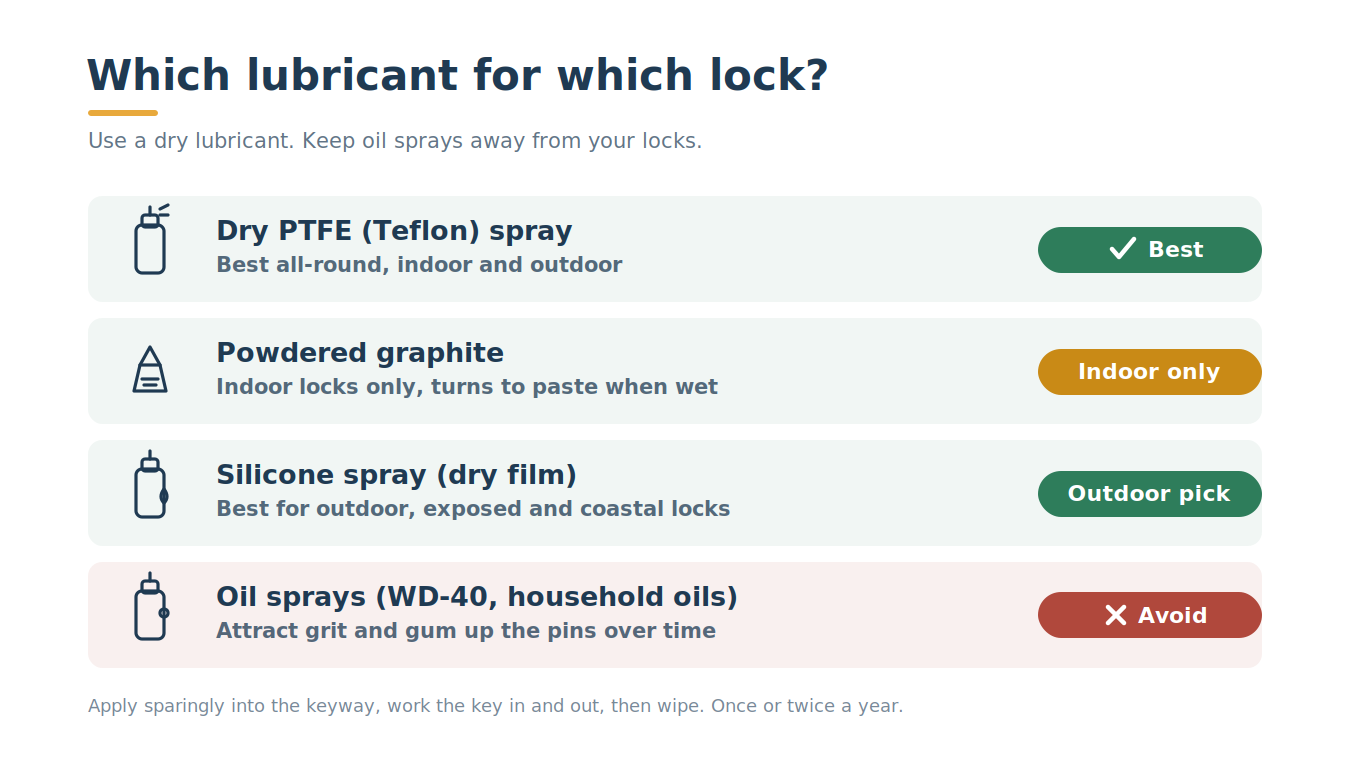
Proper maintenance prevents costly repairs and ensures your home remains secure against intruders. Always choose a dry lubricant like PTFE or silicone, avoid household oils, and service your locks every six months.
Start your maintenance today by cleaning your keyway and applying a small amount of appropriate lubricant. Your locks will operate smoothly, quietly, and reliably for years with this simple routine.