You need privacy in a shared room, but your interior door only locks from the inside. This common limitation leaves you vulnerable until you learn how to lock a door from both sides using simple tools or temporary barriers. Whether you have a standard bedroom setup or double entryways, specific techniques exist to secure your space instantly without damaging the hardware.
This guide details exact methods to engage locks externally and install robust clamps for double doors. You will discover how to manipulate privacy slots with precision tools and which removable barriers offer the highest security ratings. Follow these steps to gain full two-sided control over your environment safely and effectively.
Manipulate Standard Privacy Locks Externally

Most interior doors in bedrooms and bathrooms use privacy locks designed with a hidden external access point. Brands like Kwikset, Schlage, and Quickset often include a small slot on the exterior knob face specifically for this purpose. You can engage or disengage the latch from the outside by interacting directly with this mechanism.
Identify the Visual Lock Indicator
Examine the center of the exterior doorknob or faceplate to locate a small slot or pinhole. This feature serves as both an access point and a visual status indicator for the lock state.
* Horizontal slot position indicates the door is unlocked.
* Vertical slot position confirms the door is locked.
Always verify this visual cue before assuming the room is secure. If the slot remains horizontal after your attempt, the internal latch has not engaged properly.
Execute the Clockwise Turning Protocol
Insert a precision flathead screwdriver or a dedicated privacy lock key into the center slot. Ensure the tool fits snugly to prevent slipping or stripping the internal mechanism. Apply steady pressure and rotate the tool clockwise until you feel resistance and the slot aligns vertically.
To unlock the door from the outside, insert your tool into the vertical slot and turn counterclockwise. The indicator should return to a horizontal position, allowing the door to open freely.
Expert Note: Test your tool fit gently before applying full torque. A screwdriver blade that is too thick can permanently damage the slot, disabling external access entirely.
Resolve Issues with Non-Responsive Locks
Some older doors or unique hardware configurations may not respond to standard manipulation tools. This often occurs in older housing units where mechanisms were designed for one-sided operation only or have suffered from wear and misalignment.
Diagnose Obsolete or Broken Mechanisms
Attempt the standard turning procedure to see if the internal button engages. If the tool spins freely or the lock fails to hold, the mechanism may be broken or fundamentally incompatible with two-sided control.
* Check if the interior turn-button moves smoothly.
* Inspect for visible damage or misalignment in the knob assembly.
* Determine if the lock lacks an external slot entirely.
If the mechanism does not engage, the hardware likely requires replacement rather than manipulation.
Upgrade to Emergency Release Compatible Hardware
Install a modern privacy lock that explicitly supports external tool entry to ensure consistent two-sided functionality. Look for packaging labeled “emergency release compatible” or “tool-entry enabled” when purchasing new hardware.
- Remove the two screws located on the interior faceplate of the existing knob.
- Slide both the exterior and interior halves of the knob off the spindle.
- Install the new lock set following the manufacturer’s alignment guides.
- Test the internal button and external slot to confirm proper operation.
Select a model with a clear visual indicator and a clockwise-to-lock rotation for ease of use.
Secure Double Doors with Removable Barriers

Double doors, such as French doors or patio entries, often lack built-in two-point locking systems. A single latch is rarely sufficient for true security, so you must employ external barriers that work from both sides. These four solutions provide strong, repositionable protection without permanent installation.
Deploy a Basic Bar Clamp
Use a simple bar clamp with a single latch that slides across the door frame behind the handle. This method blocks the door from opening by creating a physical barrier between the handle and the frame.
* Best for: Quick privacy needs or low-risk situations.
* Setup time: Under 10 seconds.
* Weakness: Can potentially be lifted or pried open under significant force.
* Cost: Approximately $10 to $15.
This option is ideal for temporary setups where high-level security is not the primary concern.
Install a Dual-Hook Bar Clamp
Upgrade to a dual-hook clamp that grips both sides of the door frame simultaneously. The dual anchor points prevent lifting attempts and offer superior resistance to prying compared to single-latch models.
* Security level: High.
* Breach indicator: Extreme force may break the knob before the clamp fails.
* Ideal for: High-traffic homes or shared living spaces requiring deterrence.
This clamp remains firmly in place even when pressure is applied, making it a top choice for dependable security.
Construct a PVC-U-Bike Lock System
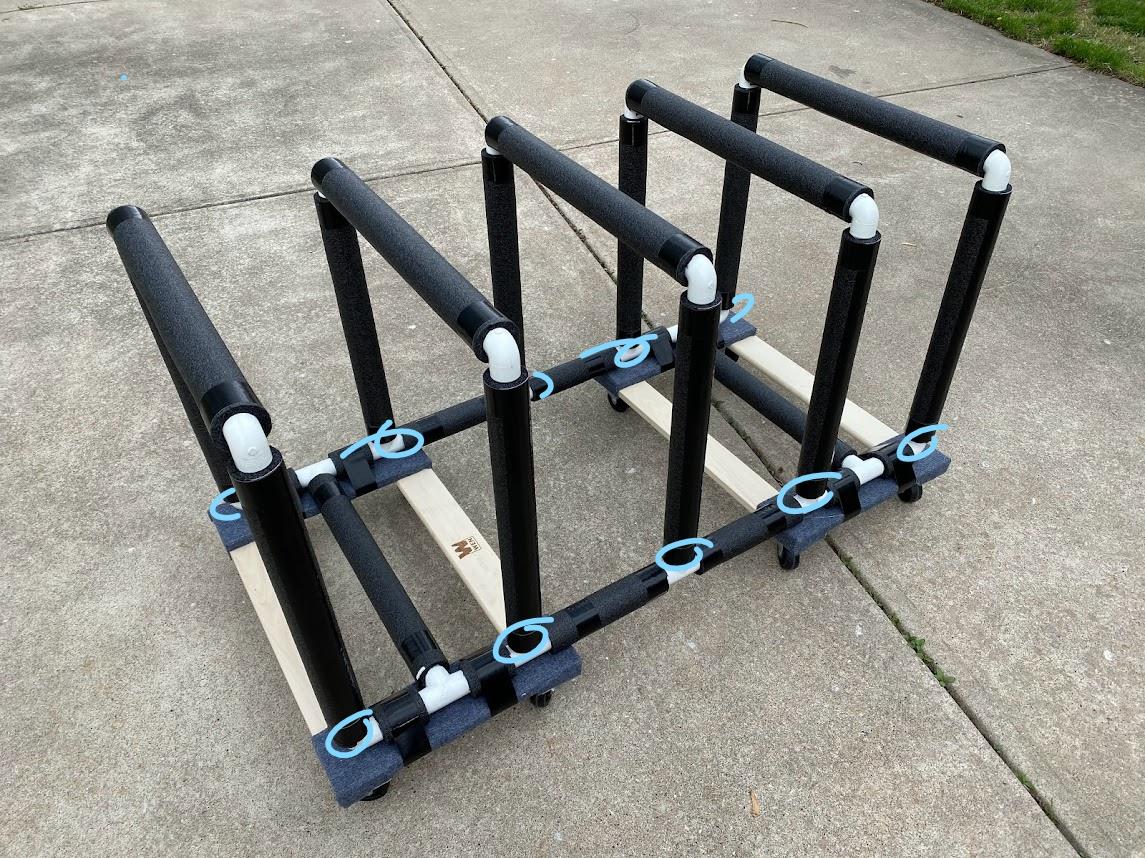
Create a custom, ultra-secure lock using PVC pipe, T-connectors, and a standard bicycle U-lock. This DIY solution offers maximum customization for irregular door widths.
1. Attach T-connectors to both ends of a cut PVC pipe section.
2. Position the U-lock vertically across the door handles or frame.
3. Slide the PVC assembly into the T-connectors and push down to tighten.
4. Use spare T-pieces as spacers to ensure a snug, immovable fit.
Critical Safety Warning: Decide carefully whether to leave the key in the lock. For fire safety, keep the key accessible or use a breakaway cord to ensure you can escape quickly.
Utilize a Six-Inch C-Clamp with Quick Release
The most effective solution is a heavy-duty 6-inch C-clamp equipped with a push-button quick release. This tool offers the best balance of speed, strength, and reliability for various handle types.
1. Pull back the lever to open the clamp jaws.
2. Slide the clamp over the door handle and the stationary frame.
3. Press the quick-release button to lock the mechanism instantly.
This method requires no assembly, works on flared or round knobs, and provides maximum security with minimal effort.
Prevent Common Locking Failures
Even simple security methods can fail if you make basic operational errors. Avoiding these mistakes ensures your chosen method functions correctly when you need it most.
Avoid Using Oversized Tools
Never force a thick screwdriver into a narrow privacy slot. Doing so can strip the internal mechanism, making it impossible to lock or unlock the door from the outside ever again. Always test the fit gently before applying rotational force.
Verify the Indicator Position
Do not assume the door is locked just because you turned the tool. Always visually confirm that the indicator slot is in the vertical position. A misaligned visual cue means the latch is not fully engaged, leaving the door vulnerable.
Search for Hidden Keys First
Many homeowners hide the original privacy key above the door frame or taped behind the knob. Check these common hiding spots before attempting to force entry or manipulate the lock, as the original key is often the easiest solution.
Lubricate Stiff Mechanisms Correctly
If the interior turn-button feels stiff, apply a dry graphite lubricant to the mechanism. Avoid using oil-based lubricants, as they attract dust and can gum up the internal parts over time, leading to failure.
Prioritize Safety and Emergency Access

Security measures should never compromise your ability to escape during an emergency. Balancing privacy with life safety is essential when installing external locking methods.
Manage Fire Risks with Keyed Systems
When using systems that require a key, such as the PVC-U-Bike lock, you must plan for rapid egress. In a fire, every second counts, and fumbling for a key can be dangerous.
* Leave the key inserted in the lock if it is safe to do so.
* Mount the key on a breakaway cord nearby for instant access.
* Prefer clamps with quick-release buttons that do not require keys.
Test Your Security System Monthly
Regularly inspect your clamps and tools to ensure they are not fatigued or stuck. Verify that buttons are not sticking and that tools still fit the lock slots properly. A failed lock during an emergency defeats the entire purpose of your security setup.
Frequently Asked Questions About Locking Doors from Both Sides
Can I lock a privacy door from the outside without a key?
Yes, most privacy locks have a small slot on the exterior knob. You can use a precision flathead screwdriver or a dedicated privacy key to turn the mechanism clockwise and engage the lock from the outside.
What is the most secure way to lock double doors temporarily?
The six-inch C-clamp with a quick-release button offers the highest security and speed. Alternatively, a custom PVC-U-Bike lock system provides maximum resistance for long-term temporary installations.
How do I know if my privacy lock is actually engaged?
Check the visual indicator slot on the exterior knob. If the slot is positioned vertically, the lock is engaged. If it is horizontal, the door is unlocked and can be opened freely.
Is it safe to use external locks on bedroom doors?
It is safe if you prioritize emergency access. Always ensure you have a way to exit quickly, such as leaving a key in the lock or using a quick-release clamp, to prevent being trapped during a fire.
Why won’t my screwdriver turn the lock on my old door?
Older housing units may have unique or obsolete mechanisms designed for one-sided operation only. If standard tools do not work, the hardware may be broken or incompatible with external manipulation.
Key Takeaways for Locking Your Door from Both Sides
Securing a door from both sides is achievable using simple tools like precision screwdrivers for privacy locks or heavy-duty clamps for double doors. You can gain full control over your space by verifying visual indicators and selecting the right barrier for your specific hardware type. Always prioritize emergency egress by avoiding complex keyed systems in high-risk areas.
Start by testing the external slot on your current door with a thin tool to see if it engages. If you need higher security for double doors, invest in a quick-release C-clamp for instant, robust protection. Take action today to ensure your privacy and safety are fully under your control.