Locked out of your home, forgotten the combination to your padlock, or need to recover access without a locksmith? You’re not alone. Many standard locks have mechanical weaknesses that allow them to be opened using simple, non-destructive techniques. With patience and the right approach, you can learn how to decode a lock using tactile feedback, precision tools, or basic measurement.
This guide walks through three proven methods for decoding common lock types: combination padlocks, the Master Lock 5400D key box, and standard pin tumbler keys. Each technique exploits predictable mechanical behavior rather than brute force. By the end, you’ll understand how to feel for resistance changes, manipulate internal wheels, and recreate keys from cut depths, all using methods grounded in real mechanical feedback.
Decode Combination Padlocks by Feel
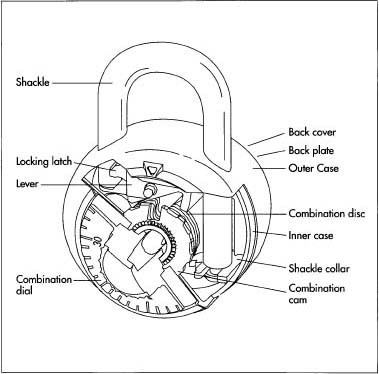
Standard combination padlocks, especially 3- and 4-dial models, are surprisingly vulnerable to tactile decoding. The trick lies in feeling subtle mechanical feedback when the internal wheels align. Once you understand the principle, you can crack most consumer-grade combination locks without any specialized tools.
Apply Shackle Tension First
Start by pulling the shackle outward with your thumb or finger. This creates internal tension that allows you to feel resistance as you turn each dial. Without tension, the wheels spin freely and give no feedback.
Hold steady pressure, just enough to feel resistance but not so much that the dials won’t turn. Think of it like pressing a door handle slightly before turning it.
Find the Stiffest Dial
Rotate each dial slowly while maintaining tension. One will feel stiffer than the others, and this is usually the first wheel in the sequence. That stiffness means it’s engaging with the locking mechanism under tension.
Begin with this dial. Turn it number by number, watching for a “break” point where resistance suddenly drops. At this moment, the wheel has aligned with the gate, and you’ll often feel a slight click or looseness.
Pro Tip: Wrap a small piece of tape around the shackle. When the correct number hits, the tape may shift slightly, giving you a visual cue along with the tactile one.
Test Each Number Slowly
Go through all 10 digits (0–9) on the stiffest dial. Even if one number feels close, test the rest. Sometimes adjacent numbers mimic alignment due to wear or manufacturing tolerances.
Once you find the number where resistance drops, leave that dial in place and move to the next.
Repeat for Remaining Dials
Keep tension on the shackle and repeat the process on the next dial. As more wheels align, the shackle may begin to wiggle slightly, which is another sign you’re making progress.
For 4-dial locks, continue until the last dial. On the final wheel, you may need to test all 10 positions manually, as feedback becomes less reliable.
Example: In testing, a 4-dial lock opened at 8901 using only tension and feel, with no prior knowledge of the combo.
Decode Vintage Five-Dial Combination Locks
Antique-style locks with five dials featuring Chinese symbols and unique designs can also be decoded using the same principle. Apply gentle pressure to the shackle, then work through each dial one at a time.
Feel for the moment when resistance drops. The dial clicks into place when aligned. As more dials align, the lock becomes looser. When all five are correct, the lock opens. The mechanism works by aligning internal gates, and even a minor misalignment prevents opening.
Reset the Combination After Access
Once open, you can reset the code on most consumer-grade locks:
1. Pull the shackle up and lock it in the open position
2. Turn the dials to your new desired combination
3. Push the shackle down. The new code is now set
This requires no tools and works on virtually every standard combination padlock.
Crack the Master Lock 5400D Key Box
The Master Lock 5400D was once the go-to lockbox for real estate agents, but it’s now discontinued due to a well-known decoding flaw. With the right tool and technique, it can be opened in minutes without drilling or force.
Use a 0.015″ Hook Pick
You’ll need a Peterson Hook #7 or any 0.015-inch thin pick with a steep hook. This thin profile fits between the dials and engages the internal locking bar.
Lay the lock flat on a stable surface for control and visibility.
Reset to 0000 Before Starting
Turn all dials to 0000. This ensures a clean starting point and prevents confusion during decoding.
Now, apply firm, consistent tension to the rightmost dial, the one next to the shackle. This mimics the pressure applied when the lock is closed.
Flick the Leftmost Dial for Feedback
With tension held, use the pick to flick the leftmost dial through each number. As you rotate it, feel for resistance.
When the correct number is reached, the wheel will snap into place, sometimes audibly. This snap means the internal gate has aligned with the locking bar.
Tested Result: First wheel snapped at 1
Move Right One Wheel at a Time
After confirming the first digit:
– Release tension
– Reapply it to the rightmost wheel again
– Flick the second wheel from the left
Repeat until all four wheels have snapped into place.
Full Example:
– Wheel 1: 1
– Wheel 2: 7
– Wheel 3: 7
– Wheel 4: 6
→ Final combo: 1776
Enter 1-7-7-6, pull the shackle, and the lock opens.
Why This Works: Simple Mechanics, No Security
The 5400D uses a basic four-wheel design with minimal anti-tamper features. Each wheel moves independently and gives clear feedback when aligned. There’s no false gating or rotational blocking, just predictable mechanical behavior.
That’s why Master Lock stopped selling it. A $5 tool and 15 minutes of practice are all it takes to defeat a lock meant to secure homes.
Decode a Key by Sight or Gauge

Keys aren’t magic. They’re coded access devices where each cut corresponds to a pin height inside the lock. If you can measure those cuts, you can recreate the key.
Understand Cut Depth Numbering
Standard residential keys like the QuickSet KW1 use six cut depths, numbered 1 to 6:
– 1: Shallowest cut, nearly flush with the blade
– 2: Slightly deeper
– 3: Mid-depth
– 4: Below midpoint
– 5: Deep
– 6: Deepest, close to the base
These numbers match pin lengths in the cylinder. When all pins sit at the shear line, the lock turns.
Estimate Cuts by Eye (Beginner Method)
With practice, you can guess cut depths just by looking. Compare each notch to the top edge of the blade. Look for relative differences. Depth 5 versus depth 2 is obvious, while 3 versus 4 takes more attention.
But visual estimation isn’t foolproof, especially with worn keys or subtle variations.
Use a Key Gauge for Accuracy
A key gauge is a precision tool shaped like a comb, marked with depth numbers. Insert it into each cut until it fits snugly, then read the number.
Work from bow to tip (top to bottom of the key).
Step-by-Step Key Decoding Example
Let’s decode a real QuickSet KW1 key:
1. Cut 1 (closest to bow): Fits snugly at 4 → Record 4
2. Cut 2: Deeper than 4, fits at 5 → Record 5
3. Cut 3: Very shallow, fits at 1 → Record 1
4. Cut 4: Slightly deeper than 1, fits at 2 → Record 2
5. Cut 5 (tip): Matches depth 5 → Record 5
Final Key Code: 4-5-1-2-5
That’s all you need to cut a new key.
Order a Replacement Without the Original
Take the code to a locksmith or hardware store and say:
“I need a code-cut key for a QuickSet KW1 with code 4-5-1-2-5.”
They’ll cut it in under 5 minutes, with no original required. This is perfect when you’re locked out, your key is worn or broken, or you’ve lost the only copy.
Protect Your Key Like a Password
A photo of your key is enough for someone to decode it, especially if they know the brand.
Security tips:
– Never post key photos online
– Don’t leave keys visible in cars or windows
– Store spare keys securely, not under mats
– Treat key codes like passwords: confidential and critical
Upgrade to Better Security
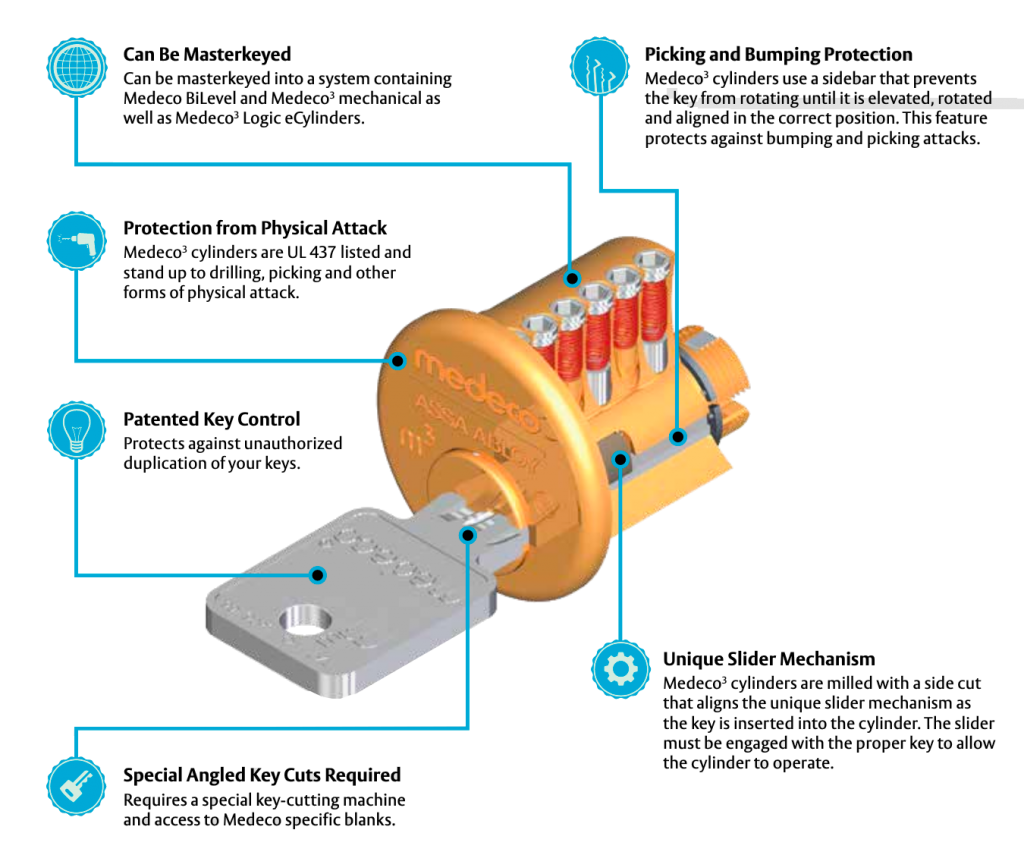
Knowing how to decode a lock also means knowing which locks can be decoded. Most consumer models are convenience devices, not true security tools.
Avoid These Weak Lock Types
- Standard combination padlocks: Easily decoded by feel
- Master Lock 5400D: Already discontinued, so don’t use it
- Common pin tumbler keys (KW1, SC1): Can be copied from photos or gauges
Choose High-Security Alternatives
For real protection, upgrade to:
– Keyed padlocks with anti-pick pins (e.g., Abus, Medeco)
– Electronic lockboxes with PIN and app control
– Restricted keyways (e.g., KW10, Primus) that require proof of ownership to duplicate
– Smart locks with tamper alerts and remote access logs
These resist decoding, picking, and unauthorized duplication.
Know When to Use These Skills
Decoding a lock is a powerful skill, but it comes with responsibility.
Appropriate Uses
Use these techniques for:
– Regaining access to your own property
– Emergency situations like a locked medicine cabinet
– Professional locksmithing or security auditing
– Learning mechanical systems and vulnerabilities
Never Use for Unauthorized Access
Avoid these actions at all costs:
– Do not decode locks you don’t own
– Do not share methods that enable theft
– Do not exploit others’ security flaws
Use this knowledge to protect, not invade.
Quick Reference: Decoding Methods Compared
| Lock Type | Primary Tool | Method | Time Required | Skill Level |
|---|---|---|---|---|
| Standard Combination Padlock | None (tension only) | Tactile feedback through shackle tension | 5-15 minutes | Beginner |
| Master Lock 5400D | Peterson Hook #7 (0.015″) | Wheel manipulation under tension | 10-20 minutes | Intermediate |
| Standard Pin Tumbler Key | Key gauge or visual estimation | Cut depth measurement | 2-5 minutes | Beginner to Intermediate |
Frequently Asked Questions About Decoding Locks
Can you decode a lock without breaking it?
Yes. All three methods covered in this guide are non-destructive. They rely on tactile feedback, mechanical manipulation, or measurement rather than drilling or forcing. The lock remains functional after decoding.
What is the easiest lock to decode for beginners?
Standard 3-dial combination padlocks are the easiest. They require only steady tension on the shackle and patience. No tools are needed, and most beginners can decode one within 15 minutes of practice.
How long does it take to decode a Master Lock 5400D?
With a Peterson Hook #7 and some practice, decoding a 5400D typically takes 10 to 20 minutes. First attempts may take longer, but the technique becomes faster with repetition.
Is it legal to decode a lock you own?
Yes, decoding locks you own or have explicit permission to access is legal. However, decoding locks belonging to others without authorization is illegal in most jurisdictions and may result in criminal charges.
Can someone decode a key from a photo?
Yes, especially for common key types like QuickSet KW1. A clear photo showing the cuts allows anyone familiar with key gauges to estimate or measure the depths and cut a duplicate.
What tools do I need to start decoding locks?
For combination padlocks, you need nothing but your hands. For the Master Lock 5400D, you need a 0.015-inch hook pick like the Peterson Hook #7. For keys, a key gauge for your specific key brand is ideal.
Key Takeaways for Decoding Locks Safely and Responsibly
You now know how to decode a lock using three proven methods: tactile feedback for combination padlocks, mechanical manipulation for the Master Lock 5400D, and cut depth measurement for standard keys. These techniques work because most consumer locks prioritize convenience over true security.
The best defense is upgrading your hardware. Choose locks with anti-pick pins, restricted keyways, or electronic authentication for valuable applications. Keep decoded combinations and key codes private, and treat them with the same care as passwords.
Your next step is to assess your own locks. Identify which ones use vulnerable designs and replace them with high-security alternatives. Understanding how locks fail is the first step toward building better protection.