You stand at your front door after a long day and wonder how a small piece of metal actually unlocks the heavy door. The answer lies in a precise mechanical puzzle where internal pins must align perfectly to allow rotation.
This guide explains exactly how a key lock works by detailing the interaction between keys and internal components like pins and shear lines. You will learn why only the correct key opens your door and what makes modern locking systems secure against intrusion.
The Anatomy of a Key and Lock Cylinder

Every mechanical locking system relies on the precise physical interaction between two distinct parts. Understanding these components reveals exactly how does a key lock work during daily use.
Key Structure and Functional Parts
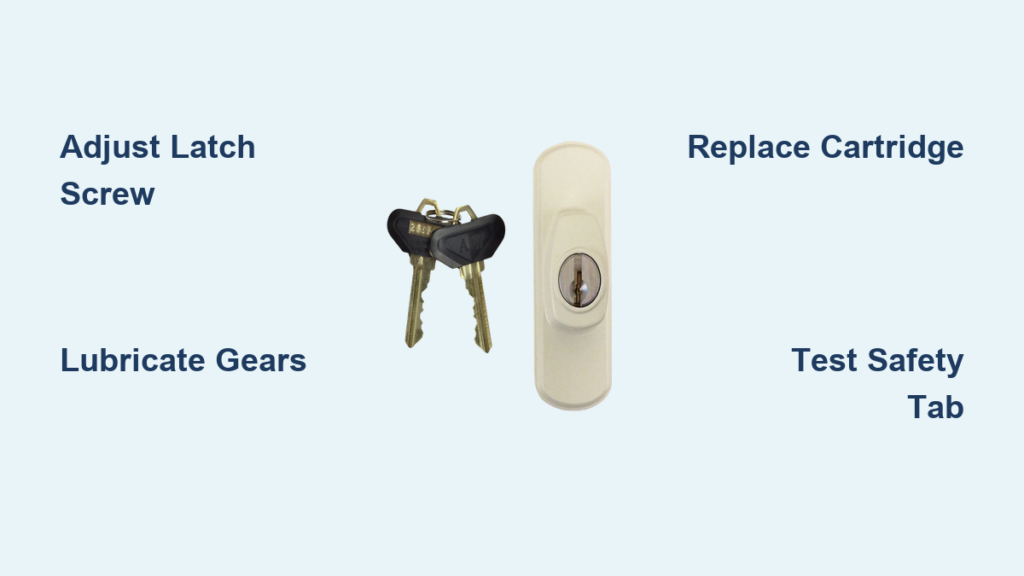
A standard key consists of specific sections designed for grip and mechanical operation.
- The Bow: This is the handle you hold to apply turning force.
- The Blade: This long section slides into the lock to engage internal parts.
The blade edge features bittings, which are notches of varying depths. These cuts correspond directly to the pin lengths inside the lock cylinder. Side grooves on the blade align with internal guides to ensure only keys with the correct profile can enter the keyway.
Internal Components of the Lock Cylinder
Inside the lock housing, several critical parts work together to secure your door.
- Plug: The inner cylinder that rotates when the correct key is inserted.
- Pin Chambers: Vertical holes drilled through the case and plug to house pin stacks.
- Key Pins: Bottom pins that sit directly above the key blade.
- Driver Pins: Top pins forced downward by springs to block rotation.
- Springs: Components that keep driver pins pressed into the plug.
- Shear Line: The gap between the plug and outer casing where alignment must occur.
Without the right key, driver pins straddle the shear line and physically lock the plug in place.
How a Pin Tumbler Lock Opens
The most common residential lock uses a pin tumbler mechanism that depends on precision alignment rather than force. This design answers the core question of how does a key lock work with mechanical efficiency.
The Locked State Blocking Rotation
When the lock is secured, springs push the driver pins down into the plug. These pins cross the shear line and create a solid mechanical barrier. Any attempt to turn the plug fails because the driver pins bind against the stationary outer casing. It does not matter how hard you twist, as an incorrect tool cannot overcome this blockage.
Aligning the Shear Line with the Correct Key
Inserting the right key triggers a specific sequence of events to release the bolt.
- The blade slides fully into the keyway channel.
- Each bitting lifts a key pin to a specific height.
- This action pushes the corresponding driver pin upward until it clears the shear line.
- All pin interfaces align perfectly at the boundary between the plug and case.
- Turning the key now rotates the plug freely to retract the bolt.
This entire process happens in milliseconds but requires exact tolerances often within 0.025 mm.
Why Incorrect Keys Fail to Open Locks
An incorrect key disrupts the critical alignment needed for rotation. A shallow cut lifts a key pin too little, leaving the driver pin blocking the shear line. A deep cut lifts the stack too high, causing the driver pin to get stuck in the upper casing. Even one misaligned pin prevents the plug from rotating, which is why random keys rarely work.
Master Key Systems Explained

Buildings with multiple rooms often use master key systems to allow different access levels. These systems modify the standard pin arrangement to answer how does a key lock work for multiple users.
How Master Pins Create Dual Shear Lines
The system adds a third piece called a master pin between the key pin and driver pin. This configuration creates two possible alignment points within the same pin stack. The change key aligns the gap between the key pin and master pin. The master key aligns the gap between the master pin and driver pin.
Access Hierarchy in Practice
- Change Key: Opens only one specific door by aligning the lower shear point.
- Master Key: Opens many doors by aligning the upper shear point.
- Grand Master Key: Opens entire zones or buildings in complex systems.
This enables layered access control ideal for hotels or offices without compromising basic security principles.
Risks Associated with Master Keying
While convenient, master key systems can reduce overall security compared to single-key setups. More pin combinations mean tighter tolerances and potential wear over time. Skilled attackers can sometimes exploit shear line ambiguity to pick these locks more easily. Lost master keys often require a full system re-keying to maintain safety.
Alternative Lock Mechanisms
Not all locks use pin tumblers, as different designs offer trade-offs between cost and durability. Exploring these variations helps clarify how does a key lock work across different applications.
Wafer Tumbler Locks for Simple Security
These locks replace pins with flat wafers and are common in cars and cabinets. Springs push wafers into grooves in the outer casing to block rotation. The correct key lifts each wafer entirely into the plug to clear the path. They are generally easier to pick than pin tumblers due to simpler design.
Lever Tumbler Locks for High Security
Common in safes and fire-rated doors, these use levers with gates that must be lifted to a precise height. The bolt can only slide forward when all levers align correctly. Double-acting designs require levers to be lifted neither too high nor too low. This makes them highly resistant to picking and drilling.
Warded Locks and Ancient Designs
One of the oldest designs uses fixed obstructions called wards inside the lock. The key must have matching slots to bypass these barriers. A skeleton key with removed metal can often bypass these wards easily. You still find these in antique furniture or low-security interior doors.
Disc Tumbler and Tubular Locks
Disc tumbler locks use rotating discs with slots that must align for a sidebar to drop. These are extremely resistant to picking and drilling. Tubular locks arrange pins in a circle and require a cylindrical key with radial indentations. Both offer higher security than standard warded designs.
Electronic and Smart Lock Evolution

Modern locks increasingly rely on digital credentials instead of physical metal keys. This shift changes the traditional answer to how does a key lock work by introducing electronic verification.
Keycards and RFID Technology
Magnetic stripe cards store data similar to credit cards and require swiping through a reader. RFID cards use radio waves to transmit a unique ID when held near a sensor. Both systems require power and can fail during outages without a mechanical backup.
Remote Keyless Entry Systems
Cars and garage doors often use remote fobs that send rolling codes. Each press generates a new encrypted signal to prevent replay attacks where thieves record and resend signals. Most include a hidden mechanical key for emergencies when the battery dies.
Smart Locks and Digital Access
These devices connect via Bluetooth or Wi-Fi to authenticate users through apps or biometrics. They allow remote access and activity logs but remain vulnerable to hacking or jamming. Always choose models with strong encryption and offline backup options for reliability.
Historical Evolution of Lock Technology
Locks have evolved from simple wooden bolts to sophisticated digital access systems over thousands of years. This history shows how humanity has constantly refined how does a key lock work.
Ancient Origins in Egypt and Assyria
The earliest known locks appeared over 6000 years ago in Nineveh using wooden pins. Egyptian pin locks used a bolt with holes where inserting a key lifted pins upward to free the bolt. This ancient design is the direct ancestor of the modern pin tumbler system used today.
Roman Innovations and Metal Keys
Romans developed iron locks and keys that utilized internal wards for security. Wealthy citizens wore keys as rings to signal status and keep them accessible. This era introduced warded locks with internal obstructions that required specific key shapes.
Industrial Breakthroughs in Precision
Robert Barron invented the lever tumbler in 1778 to require precise lift heights. Joseph Bramah created a nearly unpickable lock in 1784 that stood unbroken for 67 years. Linus Yale Jr. patented the modern flat key in 1861, creating the standard design we still use globally.
Key Duplication and Locksmithing Practices
Having a spare key is essential, but the duplication process requires precision machinery. Understanding this helps explain how does a key lock work when creating new access tools.
The Key Duplication Process
- Clamp the original key and a blank key into a duplicating machine.
- Trace the original key with a stylus while a cutter replicates the bitting on the blank.
- Modern digital cutters scan the key and use software to guide precision blades.
- Deburr the new key to remove sharp edges for smooth sliding.
Not all keys can be copied freely, as some are restricted and require proof of ownership.
Key Control and Security Measures
Unique keyway shapes prevent unauthorized entry by ensuring only correct blanks fit. You should never duplicate master keys without proper authorization from the building owner. High-security key systems like Medeco offer additional protection for sensitive areas. A skilled locksmith can also re-key a lock by changing internal pins to accept a new key.
Lock Security and Pick Resistance
Security relies on resistance to manipulation rather than just physical strength. Several features determine how does a key lock work against sophisticated attack methods.
Features That Resist Picking
- Complex Keyways: These block access to picking tools entirely.
- Security Pins: Spool or serrated pins create false feedback to confuse attackers.
- Tighter Tolerances: Reduced play makes it harder to feel pin movement.
- Sidebars: Secondary locking mechanisms add extra layers of defense.
High-security locks often require special tools and certification to service properly.
Common Attack Methods to Avoid
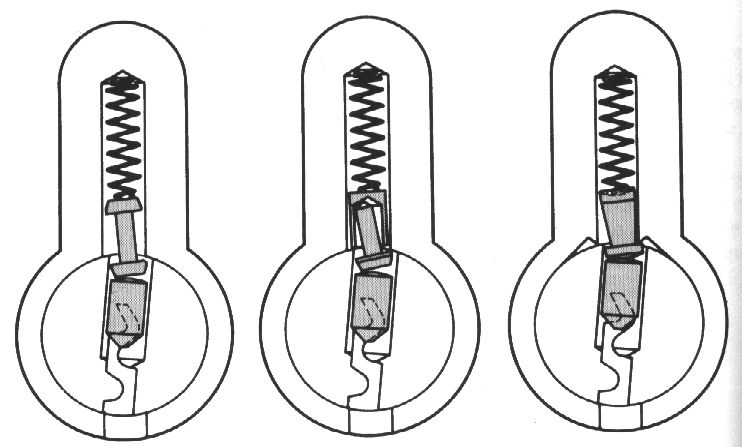
Lock picking uses a tension wrench and pick to lift pins individually to the shear line. Bumping involves inserting a specially cut key and striking it to bounce pins above the shear line. Drilling destroys the cylinder and requires complete replacement. Decoding measures resistance to determine pin heights without disassembly.
Maintenance Tips for Long-Lasting Locks
Even the best lock fails without proper care and regular maintenance. Following these tips ensures your lock continues to demonstrate how does a key lock work effectively for years.
Proper Lubrication Techniques
Never use oil or WD-40 in locks as these attract dirt and gum up residue. Use dry lubricants like graphite powder or Teflon-based sprays instead. Apply these sparingly every 6 to 12 months to keep internal components moving smoothly.
Preventing Wear and Jamming
Replace keys showing visible wear on the bittings to prevent internal damage. Clean keyways gently with compressed air to remove dust and debris. If the key sticks or turns stiffly, have a locksmith inspect the unit for misalignment. Regular maintenance prevents costly replacements and ensures reliable security.
Frequently Asked Questions About Key Locks
How does a key lock work with just a small piece of metal?
The key lifts internal pins to precise heights so they align at the shear line. This alignment removes the mechanical barrier blocking the plug, allowing it to rotate and open the door.
Can a master key open any lock in a building?
No, a master key only opens locks within its specific system hierarchy. It works because those locks contain extra master pins that create a second valid shear line for that specific key.
Why do some keys have grooves on the side?
Side grooves align with internal guides or wards to ensure only the correct key profile enters the cylinder. This prevents incorrect keys from even reaching the pins to attempt manipulation.
What happens if I lose my master key?
Losing a master key compromises the entire system security since it opens multiple doors. You typically must re-key all affected locks to restore safety and prevent unauthorized access.
Are electronic locks more secure than mechanical ones?
Electronic locks offer convenience but introduce digital vulnerabilities like hacking or battery failure. Mechanical locks remain immune to power outages and cyber attacks when properly maintained.
Key Takeaways for Understanding Key Lock Mechanics
Understanding how does a key lock work reveals the precision engineering behind everyday security. The core principle remains consistent: the correct key aligns internal components like pins or levers to clear the shear line for rotation. Whether using traditional metal keys or modern smart systems, proper alignment is the universal requirement for access.
Regular maintenance and awareness of security features protect your property effectively. Choose locks with pick-resistant features and maintain them with dry lubricants to ensure longevity. If you have concerns about your current setup, consult a professional locksmith to evaluate your security needs.