Loose fasteners cause machinery failure and safety hazards in countless industries every year. You need different types of lock nuts to stop vibration from undoing your hard work on vehicles or structural builds.
This guide details how nylon inserts, distorted threads, and mechanical systems prevent loosening under stress. You will learn to select the right nut for heat, load, and reusability needs.
How Nylon Insert Lock Nuts Prevent Loosening

Nylon insert lock nuts, often called elastic stop nuts, dominate general industrial applications. They feature a non-metallic ring pressed into the top internal threads to grip the bolt.
The Mechanics of Prevailing Torque
The nylon ring deforms slightly as the bolt threads pass through the interior. This deformation creates constant friction known as prevailing torque during the entire tightening process. Unlike standard nuts, resistance builds immediately rather than only at the final turn. The material holds the bolt firmly in place even when subjected to moderate vibration.
Ideal Applications and Temperature Limits
These nuts excel in automotive components and HVAC systems where temperatures remain moderate.
* Temperature Range: Effective up to 250°F (121°C).
* Limitation: Nylon softens and loses grip above this threshold.
* Reusability: Limited life due to plastic wear after multiple installations.
Avoid using these near engine exhaust manifolds or any high-heat source. Lubricants can also reduce their gripping power unless specifically approved by the manufacturer.
Metal Lock Nuts Using Distorted Threads

Metal lock nuts achieve locking action by physically deforming the thread profile instead of using plastic. This design allows them to function in environments where nylon would fail.
Top-Style Jam Nuts for Tight Spaces
A jam nut is thinner than a standard nut and works by tightening against a primary nut. The friction generated between the two metal surfaces locks them together securely.
* Install the thin jam nut first on the bolt.
* Tighten the main nut firmly against the jam nut.
* Use this method where vertical space is restricted.
This pairing creates a robust mechanical lock without requiring extra parts like washers or pins.
Castle Nuts with Cotter Pin Security
Castle nuts feature slots cut into the top that align with a drilled hole in the bolt shank. A cotter pin passes through the assembly to physically prevent rotation.
* Common in steering linkages and aircraft control surfaces.
* Provides a positive mechanical lock that withstands extreme vibration.
* Requires a specifically drilled bolt and precise alignment during installation.
Overtightening can distort the slots, so care is needed when inserting the cotter pin.
Stover Nuts for Agricultural Machinery
Stover nuts utilize a flanged base and a crowned top to create spring-like tension. The crown compresses to provide elastic force while the flange increases the bearing surface area.
* Frequently found on lawn equipment and farm machinery.
* Self-aligning design resists vibration effectively.
* Not suitable for applications requiring extremely high torque values.
All-Metal Prevailing Torque Solutions
All-metal prevailing torque nuts are essential for extreme environments involving high heat or corrosive chemicals. They rely entirely on metal deformation to maintain clamping force.
Flexloc Nuts with Internal Spring Collars
Flexloc nuts contain a captured spring collar that compresses radially against the bolt threads. This design maintains constant tension even when thermal expansion occurs.
* Ideal for heavy machinery and military equipment.
* Reusable multiple times without losing locking torque.
* Resistant to UV exposure, chemicals, and high temperatures.
These units cost more than standard options but offer superior longevity in harsh conditions.
Spiralock Nuts with Wedge Ramps
Spiralock nuts feature a 30-degree wedge ramp at the root of the thread. When tightened, the male thread is drawn into this wedge to create continuous spiral contact.
* Used extensively in aerospace and power generation.
* Distributes load evenly to reduce thread fatigue.
* Requires compatible bolts to achieve the full locking effect.
This unique geometry minimizes stress concentration points that often lead to fastener failure.
Two-Piece Lock Nut Systems for Heavy Duty Use
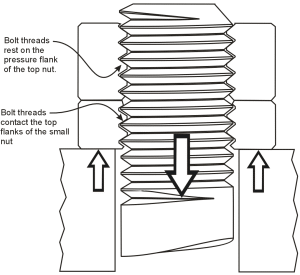
Two-piece systems utilize the interaction between two separate components to create a secure lock. These are often preferred for critical structural applications.
Double Nutting Technique
The double nutting method involves placing a thin nut followed by a standard nut on the same bolt. Tightening them against each other transfers the load and creates high friction.
* Cost-effective for field repairs and heavy construction.
* Must follow the correct sequence: jam nut first, then main nut.
* Reversing the order can cause the system to loosen under load.
Adjust torque specifications carefully to avoid overstressing the bolt assembly.
Slotted Nut and Tang Washer Combinations
This system pairs a slotted nut with a specialized washer featuring bendable tabs. One tab fits into the nut slot while another folds against the mounting surface.
* Prevents both rotational and lateral movement effectively.
* Common in railway components and industrial motors.
* Installation takes longer but provides fail-safe security.
Specialty Lock Nuts for Unique Needs
Specialty lock nuts address specific requirements like assembly speed or aesthetic finish. These variants serve niche roles where standard designs fall short.
Keps Nuts for Rapid Assembly
Keps nuts come with a free-spinning washer attached to the base. This integrated design speeds up installation and protects the mating surface from damage.
* Popular in electrical panels and sheet metal fabrication.
* Reduces part count and assembly time on production lines.
* The flange may crack if excessive torque is applied.
Note that these are not true locking nuts unless combined with thread adhesive or a distorted thread design.
Wing Nuts for Manual Adjustment
Wing nuts feature large wings that allow for hand-tightening without tools. They are designed for applications requiring frequent adjustment or removal.
* Used on furniture, inspection covers, and temporary fixtures.
* Enables fast, tool-free operation.
* Requires a secondary locking mechanism in high-vibration areas.
Plastic wing variants offer slight resistance but should not be relied upon for critical safety connections.
Cap Nuts for Aesthetic Finish
Cap nuts, or acorn nuts, have a dome shape that covers the exposed end of a bolt. They protect threads from corrosion and provide a clean visual appearance.
* Common in architectural fixtures and guardrails.
* Offer minimal locking ability on their own.
* Often used with adhesive for added security.
Their primary function is protection and aesthetics rather than high-performance locking.
How to Choose the Right Lock Nut
Selecting the correct fastener depends on analyzing your specific operating conditions and load requirements.
Evaluate Environmental Factors
High heat demands all-metal options like Flexloc or Stover nuts since nylon will melt. Corrosive environments require stainless steel or coated variants to prevent rust. If frequent disassembly is needed, choose reusable designs like castle nuts.
Assess Load and Vibration Levels
Low vibration applications may only need a nylon insert or Keps nut. High shock loads require Spiralock designs or slotted nuts with tang washers. Dynamic cycling applications perform best with all-metal prevailing torque types.
Consider Installation Constraints
Field repairs favor simple solutions like jam nuts or wing nuts. Production lines benefit from the speed of Keps or patch-coated nuts. Safety-critical systems demand positive locks such as castle nuts with cotter pins.
Always adhere to manufacturer torque specifications to ensure proper performance.
Common Installation Mistakes to Avoid
Proper installation is just as important as selecting the correct different types of lock nuts. Errors during assembly can lead to immediate failure.
Using Damaged or Worn Tools
Worn sockets can round off nut corners, preventing full tightening. Always use properly sized, undamaged tools to ensure the locking mechanism engages fully.
Excessive Reuse of Nylon Inserts
Nylon inserts wear down after two or three uses, significantly reducing locking torque. Replace these nuts after repeated assembly cycles to maintain safety standards.
Mixing Incompatible Fasteners
Coarse-thread bolts may not engage correctly with fine-thread lock nuts. Match the thread pitch, diameter, and class to ensure full engagement and proper locking.
Ignoring Surface Preparation
Dirty or oily threads reduce friction and compromise the locking action. Clean all threads before assembly and inspect them for any visible damage.
Maintenance and Inspection Tips
Regular maintenance ensures your fasteners remain secure over the long term.
Visual Inspection Schedule
Inspect high-vibration equipment monthly and after extreme temperature changes. Look for cracked nylon inserts, bent cotter pins, or corrosion on threads.
Torque Verification Procedures
Use a calibrated torque wrench to check fastener tightness periodically. Do not retorque without reason, as disturbing a locked joint can weaken the connection.
Replacement Guidelines
Replace lock nuts if prevailing torque is lost or threads appear stripped. Corrosion that compromises integrity also warrants immediate replacement. When in doubt, replace the fastener rather than risk failure.
Frequently Asked Questions About Lock Nuts
Can I reuse a nylon insert lock nut?
You should generally replace nylon insert nuts after two or three uses. The plastic wears down with each removal, causing a significant drop in locking torque and safety.
What is the temperature limit for nylon lock nuts?
Nylon insert lock nuts are effective up to 250°F (121°C). Temperatures exceeding this limit cause the nylon to soften, resulting in a complete loss of locking ability.
How do castle nuts differ from standard lock nuts?
Castle nuts use a physical cotter pin inserted through slots to prevent rotation. This provides a positive mechanical lock ideal for extreme vibration where friction-based nuts might fail.
Are all-metal lock nuts reusable?
Yes, most all-metal prevailing torque nuts like Flexloc or Spiralock designs are reusable. They maintain their locking force over multiple cycles provided the threads are not damaged.
Why use a jam nut instead of a single lock nut?
Jam nuts create a secure lock by friction between two nuts, which is useful in low-profile spaces. They are also effective in high-heat environments where nylon inserts would melt.
Key Takeaways for Selecting Different Types of Lock Nuts
Choosing the right fastener ensures your assembly remains safe and secure under stress. Nylon inserts work well for moderate conditions, while all-metal options handle extreme heat and vibration. Always match the nut type to your specific environmental and load requirements.
Proper installation and regular inspection are critical for maintaining locking performance. Avoid common mistakes like reusing worn nylon nuts or using damaged tools. By understanding different types of lock nuts, you can prevent loosening and ensure the longevity of your mechanical projects.