You are locked out of your room or storage unit with no spare key nearby. Frustration builds as you realize a simple safety pin might be your only tool to regain entry without a locksmith.
This guide explains exactly how to pick a lock with a safety pin on simple pin tumbler mechanisms. You will learn to modify household items into tools, apply correct tension, and manipulate internal pins while understanding the legal limits and risks involved.
Identify Compatible Pin Tumbler Locks

Not every lock can be opened with improvised tools. Success depends entirely on the internal mechanism of the device you are facing. You must identify a standard pin tumbler lock before attempting this method.
Target Standard Household Locks
These locks use spring-loaded pins that align at a specific shear line to allow rotation. If your lock has a traditional keyhole and uses a standard metal key, it likely contains three to five pins. These are the primary targets for learning how to pick a lock with a safety pin.
Avoid Complex Security Mechanisms
Do not waste time on locks designed to resist picking. Your improvised tools will fail against:
* Disc-detainer locks often found on bicycle chains
* Tubular locks featuring circular keyholes
* High-security models with sidebar mechanisms or anti-pick pins
Test the Keyway Space
Insert your unmodified safety pin gently into the keyhole. You need sufficient space to maneuver two separate items inside simultaneously. If the keyway feels too narrow or obstructed, you cannot fit both a tension tool and a picking hook.
Modify Two Safety Pins for Tools

You cannot use safety pins in their natural state. You must transform two separate pins into specialized instruments. One acts as a wrench to turn the lock, while the other serves as the hook to lift the pins.
Create the Tension Wrench
Take the first safety pin and straighten most of the wire. Leave a small section at the tip bent at a 90-degree angle to form an L-shape. This bend acts as the lever you will use to rotate the lock plug.
* Insert this L-shaped end into the bottom of the keyway.
* Apply light rotational pressure in the direction the key turns.
* Most door locks require clockwise pressure to open.
Shape the Picking Hook
Straighten the second safety pin completely until it is a straight wire. Use pliers or your fingernail to curve the very tip into a gentle hook. This small curve is essential for catching and lifting the internal pins.
* Keep the curve minimal to maintain control inside the lock.
* Ensure the tip is smooth to prevent snagging on internal components.
* A rough or jagged tip can damage the lock mechanism permanently.
Pro Tip: If you have access to a file or sandpaper, smooth the tip of your picking hook. A polished surface slides past pins more easily than a rough, cut end.
Apply Precise Tension to the Lock
Tension is the most critical element when you attempt to pick a lock with a safety pin. Without proper tension, the pins will simply fall back into place after you lift them.
Position the Tension Tool
Place the L-shaped end of your tension wrench into the bottom of the keyway. Do not insert it too deep, or it may block the pins you need to lift. The goal is to engage the plug without obstructing the pin stacks.
Calibrate Rotational Pressure
Apply light, steady pressure in the opening direction. You are looking for a “Goldilocks” zone of pressure.
* Too much pressure binds the pins tightly, making them impossible to lift.
* Too little pressure allows the driver pins to drop back down immediately.
* Aim for just enough force to feel the plug resist slightly, similar to turning a sticky doorknob.
Manipulate Pins One Stack at a Time
Now you use the hooked safety pin to interact with the internal mechanism. This process requires patience and a gentle touch rather than brute force.
Insert the Pick from the Top
Slide the hooked end of your picking tool into the top portion of the keyway. Start with the pin stack farthest from you, often called the back pin. Working from back to front prevents you from disturbing pins you have already set.
Lift and Feel for the Shear Line
Gently push each pin upward while maintaining your tension. You are searching for a specific sensation where the driver pin clears the shear line.
* Listen for a faint click or feel a subtle give in the wire.
* The bottom pin stays in the plug while the top driver pin enters the housing.
* This alignment allows the plug to rotate slightly under your tension.
Progress Through the Lock
Once a pin sets, it will stay in place due to your tension tool. Move to the next pin closer to the front of the lock. Repeat the lifting motion until all pins are set. If the lock does not turn, you may have lost tension on a set pin. Ease off slightly to reset the mechanism and start again.
Recognize the Moment the Lock Opens

Success when you pick a lock with a safety pin is often subtle. Do not expect a loud click or a dramatic snap. The feedback is frequently tactile rather than auditory.
Feel for Plug Rotation
When the final pin aligns at the shear line, the cylinder (plug) will rotate freely. You may feel the entire core shift or drop a fraction of an inch under your tension wrench. This movement indicates that all pins are cleared.
Turn to Disengage the Latch
Maintain your rotational pressure and turn the safety pin wrench as if it were a key. The latch mechanism should disengage, allowing you to open the door or padlock.
* If the lock feels stuck, wiggle the pick gently while turning.
* Avoid forcing the tool, as this can bend the thin wire or damage internal components.
Troubleshoot Common Picking Failures
Most attempts to pick a lock with a safety pin fail due to technique errors rather than tool failure. Identifying the specific issue helps you adjust your approach quickly.
Issue: No Feedback from Pins
Cause: You are applying too much tension pressure.
Fix: Lighten your grip significantly. You only need enough pressure to feel the plug resist slightly.
Issue: Pin Will Not Lift
Cause: Your pick tip is bent incorrectly or snagging.
Fix: Remake the pick with a smoother, finer curve or ensure the tip is not catching on the keyway walls.
Issue: Lock Turns Partially Then Stalls
Cause: One or more pins have reset or dropped out of alignment.
Fix: Release all tension to let the pins drop, then reapply tension and restart the lifting process.
Issue: Tools Will Not Fit
Cause: The keyway is too narrow for two safety pins.
Fix: Try using a thinner wire like a paperclip for one of the tools or abandon the attempt if the lock is too tight.
Understand Legal and Ethical Boundaries
Lock picking is a mechanical skill that carries significant legal weight. You must understand the boundaries before attempting to pick a lock with a safety pin.
Restrict Practice to Owned Locks
Only use this method on locks you own or have explicit written permission to open. Using these skills on property that is not yours is illegal and can result in criminal charges, regardless of your intent.
Prevent Unintentional Damage
Improvised tools are not precision instruments. Forced picking can bend internal pins, jam the mechanism, or break inside the lock.
* Damaged locks often require full replacement.
* Consider the cost of a new lock before attempting emergency entry.
Pursue Formal Training
Many security professionals start by learning how locks work. If you are interested in this field, invest in a transparent practice lock and professional tools. This allows you to learn safely without the risk of damaging property or breaking the law.
Utilize Alternative Household Tools
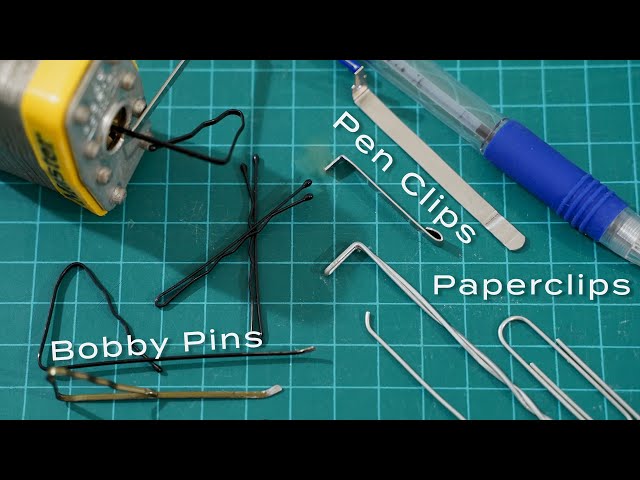
If you do not have a safety pin available, other common items can serve the same function. The principles remain the same when you attempt to pick a lock with a safety pin substitute.
Straightened Paperclips
Paperclips are excellent alternatives. They are thin, sturdy, and easy to bend into both tension wrenches and picking hooks. They often fit better in tight keyways than thicker safety pins.
Bobby Pins
Bobby pins are thinner and easier to manipulate than safety pins. The ridged end can provide extra grip for lifting pins, while the U-shape works well for applying tension.
Thin Stiff Wire
Any thin, stiff wire can work if it holds its shape under pressure. Avoid using tools designed for electronics, such as SIM ejectors, as they may snap inside the lock and cause permanent damage.
Warning: Never use brittle materials. If your tool breaks inside the keyway, you will definitely need a locksmith to remove the fragment and repair the lock.
Prevent Future Lockout Situations
Relying on the ability to pick a lock with a safety pin is a last resort. Proactive measures are far more reliable for ensuring access to your property.
Secure Spare Keys
Store a spare key with a trusted neighbor or in a secure lockbox away from the door. This eliminates the need for emergency picking entirely.
Upgrade to Keyless Entry
Smart locks and keypad systems remove the physical key variable. These systems often offer temporary codes for guests and logs of entry, providing better security than traditional pins.
Maintain Your Locks
Lubricate your locks annually with graphite spray. A well-maintained lock is less likely to jam, reducing the chance that you will get stuck outside in the first place.
Frequently Asked Questions About Lock Picking
Can you really pick a lock with just a safety pin?
Yes, it is possible to open simple pin tumbler locks using two modified safety pins. However, this method requires patience and practice. It will not work on high-security locks, disc detainers, or electronic systems.
Is it illegal to carry safety pins for lock picking?
Carrying safety pins is legal, but intent matters. If you are caught using them to open a lock you do not own, you could face criminal charges. Always ensure you have explicit permission before attempting to open any lock.
What type of locks are easiest to pick with household items?
Standard pin tumbler locks with three to five pins are the easiest targets. These are common in interior doors, cheap padlocks, and older exterior doors. Locks with anti-pick features or complex mechanisms resist these basic tools.
Can picking a lock with a safety pin damage it?
Yes, improvised tools can scratch internal components, bend pins, or break inside the keyway. If the tool snaps or the pins deform, the lock may stop working entirely and require replacement.
How long does it take to learn this skill?
Basic proficiency can take a few hours of practice on a transparent training lock. Mastering the feel of the pins and proper tension takes longer. Do not expect to succeed on your first attempt on a real door.
What should I do if my tool breaks inside the lock?
Stop immediately. Do not try to force the remaining piece deeper. You will likely need a professional locksmith to extract the broken fragment and assess if the lock is still usable.
Key Takeaways for Safe Lock Entry
Learning how to pick a lock with a safety pin is a fascinating demonstration of mechanical principles, but it is strictly a last-resort skill. It works only on simple pin tumbler locks and requires two modified tools: a tension wrench and a picking hook. Success depends on applying precise, light tension while feeling for the subtle click of pins aligning at the shear line.
Remember that this technique carries risks of damaging the lock and serious legal consequences if used improperly. Always prioritize legal access methods like spare keys or professional locksmith services. Use this knowledge responsibly on your own property to understand security vulnerabilities, and consider upgrading to more secure locking mechanisms if you worry about unauthorized entry.