Staring at a stuck gym locker or a bathroom door that won’t open creates immediate stress. You likely need to know how to unlock a turn lock quickly without causing damage to the mechanism or the door frame.
This guide reveals the exact Right-Left-Right sequence for combination dials and the precise tool technique for privacy doors. You will learn specific steps to reset wheels, engage internal grooves, and fix common errors in under a minute.
Master the Right-Left-Right Combination Sequence
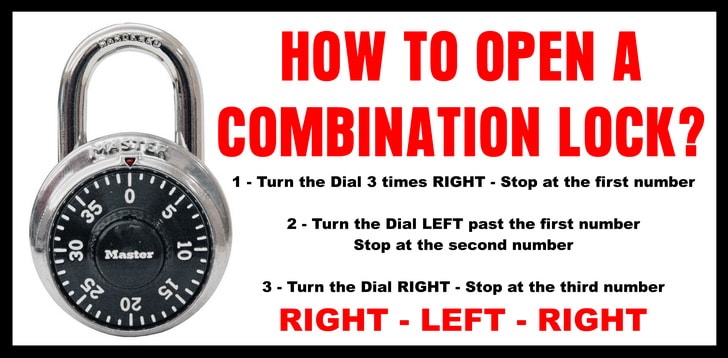
Standard dial padlocks rely on a strict mechanical order to align internal wheel gates. Getting the direction or rotation count wrong prevents the shackle from releasing even if you have the correct numbers.
Why Resetting the Dial Is Critical
You must clear residual tension from previous attempts before starting any new sequence.
- Turn the dial clockwise to the right.
- Complete three full revolutions past zero.
- This ensures all internal wheels are completely cleared.
Skipping this step causes the first number to misalign immediately.
Enter the First Number With Precision
Continue turning clockwise after your reset rotations. Stop exactly when your first number aligns with the top marker arrow.
Do not overshoot the target number. If you pass it, you must restart the entire three-turn reset process. Precision here sets the foundation for the rest of the sequence.
Execute the Pass-Over for the Second Number
This step causes the most failures because it requires passing the first number once. Turn the dial counter-clockwise to the left.
- Let the dial pass your first number completely.
- Continue turning until the second number aligns with the marker.
- The dial will pass the first number once before stopping at the second.
For a code like 18-38-21, you turn left past 18 and stop at 38.
Stop Immediately on the Third Number
Turn the dial clockwise to the right again. This time, do not make any full rotations.
Stop directly on the third number the very first time it reaches the marker. Going past this number or making extra turns will misalign the final wheel gate. For the code 18-38-21, stop instantly when you hit 21.
Apply Correct Shackle Tension
With the final number perfectly aligned, grip the U-shaped shackle firmly. Pull upward with a sharp, decisive tug.
Some older locks require significant force due to internal friction. If it does not open, recheck your alignment before pulling harder to avoid breaking the mechanism.
Open Privacy Door Locks Without a Key
Interior bathroom and bedroom doors often use privacy locks with a small exterior hole. These mechanisms allow emergency access using simple tools rather than complex keys.
Locate the Exterior Access Hole
Find the small circular hole on the outside knob or faceplate. It is typically centered and measures about 3 to 5mm in diameter.
This hole leads to a hollow chamber containing a flat locking bar. It is designed specifically for tool insertion during emergencies. If your door lacks this hole, it requires a different unlocking method.
Select the Optimal Unlocking Tool
The success of this method depends entirely on using a tool that fits the internal groove geometry.
- Eyeglass Repair Tool: This is the best option due to its narrow, flat tip that matches internal bars perfectly.
- Small Flathead Screwdriver: Use only if the tip is 1 to 2mm wide and fits without forcing.
- Bent Paperclip: A viable emergency backup, though it lacks the rigidity of professional tools.
Carry a mini eyeglass screwdriver on your keychain for reliable access anywhere.
Insert and Engage the Internal Groove
Push your chosen tool straight into the hole until it bottoms out. Do not angle the tool or force it, as this can damage the internal bar.
- Wiggle the tool gently side to side.
- Feel for a subtle click or resistance.
- This sensation means the tool tip has caught the internal groove.
If you feel no feedback, your tool may be too thick or misshapen.
Rotate to Release the Latch
Once engaged, twist the tool gently. Try rotating clockwise first, as most models release in this direction.
Apply steady, gentle pressure. If you meet firm resistance, stop immediately and try turning counter-clockwise. Forcing the tool can strip the groove and ruin the lock permanently.
Verify the Door Is Unlocked
Remove the tool carefully after rotating the mechanism. Turn the doorknob to confirm the latch retracts smoothly.
If the handle still feels stuck, reinsert the tool and ensure you have fully engaged the groove. Try rotating in the opposite direction if the first attempt failed.
Troubleshoot Common Turn Lock Failures

Even with the correct steps, mechanical variances can cause issues. Use these targeted fixes to resolve stubborn locks quickly.
Fix Combination Lock Errors
Restart the entire sequence if the shackle refuses to budge. Do not try to adjust the dial mid-process.
- Ensure every number stops exactly at the marker line.
- Confirm you passed the first number during the counter-clockwise turn.
- Try pulling the shackle upward while turning the final number.
Worn locks often respond better to slight tension during the final alignment.
Resolve Privacy Lock Tool Issues
Check that your tool fits snugly without being too thick. A loose tool will slip, while a thick one won’t insert fully.
Try both rotation directions if the first one yields no results. Manufacturer designs vary significantly between brands. If gentle pressure fails, the internal bar may be damaged or the lock non-standard.
Build Speed and Prevent Future Issues

Consistent practice transforms these techniques from clumsy attempts into automatic reflexes.
Develop Reliable Muscle Memory
Practice the Right-Left-Right pattern slowly until the pass-over motion feels natural. Most users master the sequence within three to five focused attempts.
Focus on accuracy over speed initially. Rushing causes misalignment that wastes more time than a slow, deliberate approach.
Maintain Your Lock Mechanisms
Cycle your combination dial monthly to prevent internal wheels from sticking. Store padlocks in dry areas to avoid rust buildup.
For privacy locks, never force a tool that doesn’t fit. Replace locks with worn holes to ensure emergency access remains viable when needed.
Frequently Asked Questions About Turn Locks
What if I overshoot the number on a combination lock?
You must restart the entire process from the beginning. Turn the dial clockwise three full times to reset the internal wheels before attempting the sequence again.
Can I use a regular screwdriver for privacy locks?
Only if the tip is extremely narrow (1-2mm). Standard screwdrivers are often too thick and can damage the lock hole if forced.
Why won’t my combination lock open with the right code?
You likely missed the pass-over step for the second number. Ensure you turn past the first number completely before stopping at the second digit.
How do I know which way to turn a privacy lock tool?
Try rotating clockwise first, as this is the most common direction. If it resists, gently try counter-clockwise without applying excessive force.
Is it possible to unlock a turn lock without any tools?
Combination locks require no tools, just the correct sequence. Privacy locks generally require a thin object like a paperclip or screwdriver to engage the internal bar.
Key Takeaways for Unlocking Your Turn Lock
Mastering how to unlock a turn lock saves time and prevents unnecessary damage to your property. Remember the Right-Left-Right sequence for dial locks and always perform three full reset turns before starting. For privacy doors, keep a narrow flat tool like an eyeglass screwdriver ready for instant access.
Practice these methods calmly to build confidence. With precise movements and the right technique, you can resolve almost any locked situation safely and efficiently.