Losing access to your belongings because you forgot the code on a Brinks padlock creates immediate stress. You might assume the unit is impenetrable, yet specific models like the 175-50054 contain mechanical flaws that allow rapid entry without the correct combination.
This guide details exactly how to open a Brinks lock using non-destructive methods like impact tapping and shimming. You will learn step-by-step techniques to bypass 4-dial combinations on popular models using only common household items.
Exploit the Impact Flaw in Brinks 175-50054 Padlocks
The Brinks Model 175-50054 is a staple in gyms and schools, yet it suffers from a critical weakness in its cam-and-plate system. This design flaw allows the internal mechanism to jump into an unlocked position when struck with precise force.
Execute the Hammer Tap Method
You can open this specific lock in under 10 seconds using a urethane hammer. The goal is to jar the internal plates so they momentarily misalign and release the shackle.
- Secure the lock: Ensure the padlock is fully closed and the dials are scrambled to any random number.
- Identify the strike zone: Locate the side of the lock body directly adjacent to the number dials.
- Deliver a sharp tap: Strike the housing firmly with a soft-faced urethane hammer to send a shockwave through the internals.
- Pull the shackle: Immediately yank the shackle upward right after the impact to see if it releases.
- Adjust and repeat: If the lock stays shut, turn one dial forward by a single number and tap again.
Pro Tip: Use only a rubber or urethane hammer. Metal hammers can dent the casing and ruin the lock for future use.
Why Impact Forces the Shackle Open
The internal tolerances in the 175-50054 are loose enough that physical shock disrupts the alignment of the cam plates. When you strike the lock, the plates shift just enough to trick the mechanism into thinking the combination is correct.
This vulnerability means the lock offers no real resistance to someone with a simple tool. The process leaves no scratches or marks, making the entry completely undetectable to the owner.
Decode 4-Wheel Brinks Combinations With Tension
Standard 4-wheel Brinks padlocks often lack the impact vulnerability but fail against tactile decoding. You can open these locks by feeling for binding points on the wheels while applying upward tension to the shackle.
Apply Upward Tension to Find Binding Wheels
This method requires a carabiner or similar hook to maintain constant pressure on the shackle. The tension forces the internal wheels to bind against the housing, revealing the correct numbers through resistance.
- Hook the shackle: Attach a carabiner to the shackle and pull upward firmly to simulate the opening motion.
- Test each wheel: Rotate every dial slowly while maintaining upward pressure to find the stiffest one.
- Turn the binding wheel: Rotate the stiff wheel one number at a time until you feel a distinct click or a sudden loss of resistance.
- Move to the next wheel: Once a wheel clicks into place, the next wheel in the sequence will become the new binding point.
- Repeat the sequence: Continue this process for all four wheels until the shackle releases fully.
Visual Cue: A true binding point feels like a smooth release of tension. A false gate will feel tight and rough even when turned.
Distinguish True Gates From False Gates
Manufacturers often include false gates to confuse users. These are deceptive notches that feel like the correct combination but will not open the lock.
- Retest under tension: If the lock does not open after setting all wheels, one is likely on a false gate.
- Feel for smoothness: True gates allow the shackle to move freely. False gates maintain internal tightness.
- Adjust sequentially: Release tension, move the suspect wheel one digit, and reapply pressure to verify.
This technique typically takes between 30 and 90 seconds with practice. It requires no specialized tools beyond a simple carabiner to apply the necessary force.
Bypass the Brinks 65580001 Lockbox With a Shim
The Brinks Model 65580001 key lockbox is marketed as high security but features a thin zinc alloy body. This construction allows attackers to bypass the combination entirely using a simple shim tool.
Insert a Feeler Gauge to Manipulate the Bar
You can defeat this lockbox faster than an authorized user can type the code. The method involves sliding a thin metal strip behind the dials to lift the internal locking bar.
- Prepare your shim: Cut a 0.007-inch feeler gauge into a strip roughly 6 inches long and 1/4 inch wide.
- Locate the dial gap: Slide the shim into the narrow space between any code wheel and the lock body.
- Angle toward the center: Push the shim inward to catch the horizontal metal bar running behind the dials.
- Lift and rotate: Pull the bar inward while simultaneously rotating the corresponding wheel.
- Find the loose spot: Stop turning when the wheel rotates freely without resistance. This indicates the correct digit.
- Repeat for all dials: Perform this action on all four wheels to reveal the full combination.
Expert Note: The “loose spot” feels like a dead zone in the rotation. This is the gate position where the internal bar is no longer blocking the mechanism.
Why Zinc Alloy Construction Fails Security
The 65580001 uses soft zinc alloy which offers negligible resistance to shimming tools. Unlike steel-bodied units, there are no anti-shim plates protecting the internal bar.
Test results show that a skilled user can decode the combination 3-2-3-6 in under 20 seconds. The process leaves no physical damage, allowing the lockbox to be closed and reused without the owner knowing it was compromised.
Compare Vulnerabilities Across Brinks Lock Models
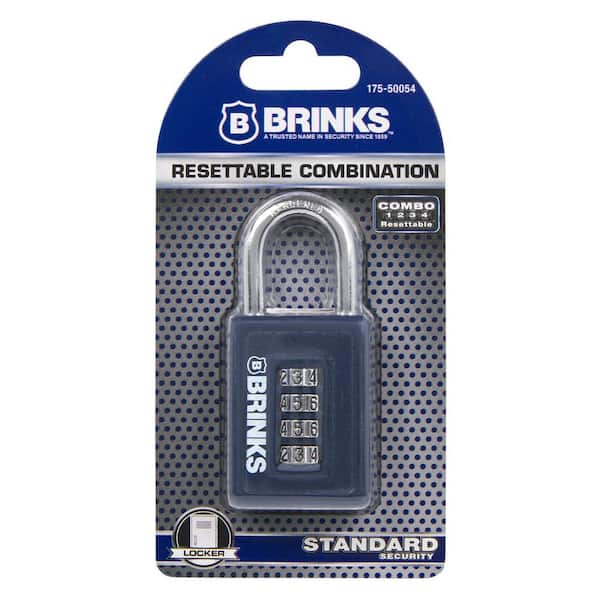
Not every Brinks product fails in the same way. Understanding the specific weakness of your model helps you choose the right entry method or security upgrade.
| Lock Model | Best Entry Method | Required Tool | Time to Open | Visible Damage |
|---|---|---|---|---|
| 175-50054 | Impact Tap | Urethane Hammer | Under 10 sec | None |
| 4-Wheel Padlock | Tension Decoding | Carabiner | 30–90 sec | None |
| 65580001 Box | Shim Bypass | Feeler Gauge | Under 20 sec | None |
All three models share a common trait: they can be opened without the combination and without leaving evidence. This makes them poor choices for securing high-value items against determined individuals.
Prevent Unauthorized Access to Your Valuables
If you rely on these locks for security, you must understand their limitations. The “high security” label on many consumer Brinks products is misleading given their susceptibility to basic bypass techniques.
Upgrade to High-Security Alternatives
To truly protect your assets, consider switching to locks with verified resistance ratings. Look for features that specifically address the flaws found in standard Brinks models.
- Hardened steel shackles: Resists cutting and provides better impact resistance.
- Anti-shim technology: Prevents feeler gauges from reaching internal bars.
- ANSI Grade 1 rating: Indicates the highest level of mechanical security.
- Electronic audit trails: Provides a record of who accessed the lock and when.
Avoid using zinc-bodied lockboxes or thin-shackle padlocks for anything of significant value. These units are designed for convenience and low-cost deterrence rather than genuine security.
Mitigate Risks on Existing Locks
If you must continue using a Brinks lock, take steps to reduce the risk of unauthorized entry. Physical placement and secondary measures can add layers of difficulty for potential intruders.
Mount lockboxes in covered locations that are out of direct sight. Use tamper-evident seals to detect if someone has accessed your property. Remember that changing the combination frequently will not stop impact or shim attacks.
Final Thoughts on Opening Your Brinks Lock
You now know how to open a Brinks lock using impact, tension, and shimming methods. These techniques exploit specific design flaws in models like the 175-50054 and 65580001 to grant access without the code.
The most critical takeaway is that these locks offer an illusion of security. They can be defeated in seconds with common tools, leaving no trace of the breach.
Replace vulnerable models with ANSI-rated alternatives if you need real protection. Use the knowledge from this guide to test your own locks or regain access to your forgotten combinations responsibly.
Frequently Asked Questions About Brinks Lock Entry
Can I open a Brinks 175-50054 without the combination?
Yes, you can open this model by tapping the side with a urethane hammer while pulling the shackle. The impact jars the internal cam-and-plate system, allowing it to release even with the wrong code.
What tools do I need to decode a 4-wheel Brinks padlock?
You only need a carabiner or similar hook to apply upward tension on the shackle. This tension helps you feel which wheel binds first, allowing you to decode the combination by touch.
Is the Brinks 65580001 lockbox secure against shimming?
No, the 65580001 is highly vulnerable to shimming. A thin 0.007-inch feeler gauge can bypass the dials entirely by manipulating the internal locking bar behind the wheels.
Do these opening methods damage the lock?
No, these non-destructive methods leave no visible marks or damage. The locks can be relocked and reused immediately, making the entry undetectable to the owner.
How long does it take to open a Brinks lock using these methods?
Impact tapping takes under 10 seconds, while shimming a lockbox takes less than 20 seconds. Tactile decoding of a 4-wheel padlock usually takes between 30 and 90 seconds with practice.
Why are Brinks locks considered vulnerable to these attacks?
Many Brinks models use loose mechanical tolerances, soft zinc alloys, and lack anti-shim features. These design choices prioritize cost and convenience over resistance to impact and manipulation.