Losing access to your vehicle creates immediate stress, especially when you need to know how to open car door lock mechanisms without a key. Whether you locked your keys inside or your electronic fob failed, specific non-destructive techniques can help you regain entry safely.
You do not need to break a window or wait for a tow truck to solve this problem. This guide details proven methods using household items like shoelaces and wire hangers to manipulate internal latches. We will cover step-by-step instructions tailored to your specific car model and lock type.
Use the Shoelace Method for Vertical Lock Knobs

This technique works best on older vehicles or budget models that feature a traditional vertical lock knob on the door panel. It requires patience but uses tools you likely already have.
Required Tools and Setup
You need a long shoelace or string and a thin tool like a butter knife or flathead screwdriver. The string must be long enough to reach across the cabin, typically three to four feet.
Step-by-Step Unlocking Process
- Slide the string through the top corner of the window between the glass and weather stripping.
- Use your thin tool to guide the string past the rubber molding into the cabin space.
- Tie a slip knot in the center of the line once the string is inside the car.
- Maneuver the loop over the vertical lock knob by twisting the string ends.
- Pull both ends of the string apart to tighten the knot around the knob.
- Lift the string upward firmly to raise the knob and unlock the door.
Note: This method only works if your car has an exposed vertical lock rod. Modern cars with flush locks will not respond to this technique.
Apply the Wire Hanger Hook Technique
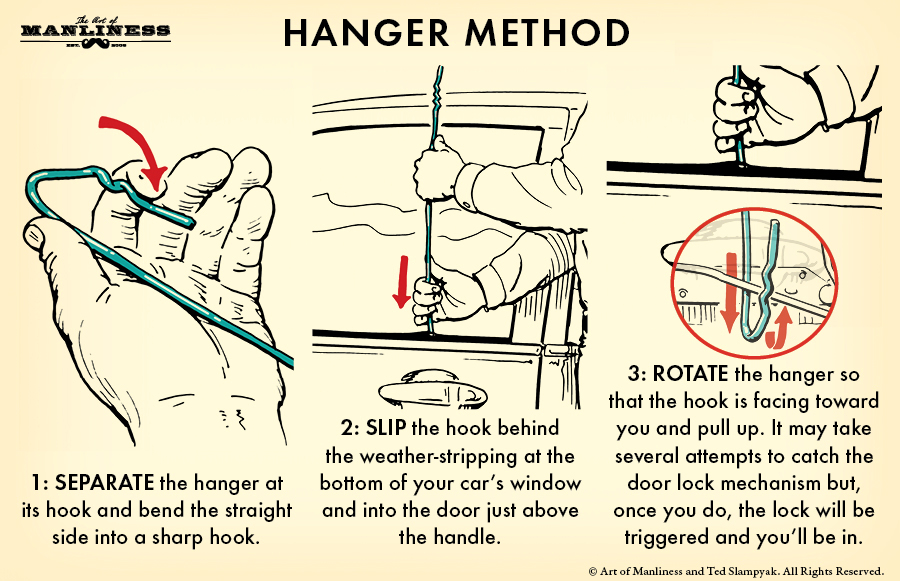
When your vehicle lacks a vertical knob, you may need to access horizontal levers or internal rods. A bent wire hanger serves as an effective hook for these scenarios.
Targeting Internal Mechanisms
This approach suits cars with horizontal sliding levers or exposed vertical rods behind the door panel. You can also use the metal rod from an old wiper blade for added stiffness.
Creating and Using the Hook
- Straighten a wire coat hanger completely, leaving a small half-inch hook at one end.
- Slide the hooked end between the window glass and the door seal at the top corner.
- Feel for the metal linkage or black lever connected to the latching mechanism.
- Hook the rod or lever and pull upward firmly to disengage the lock.
Pro Tip: Add a slight bend near the hook to improve control and prevent the tool from slipping off the mechanism.
Rushing this process can tear your weather stripping. Insert the wire slowly and angle it downward after entry to protect the seal.
Try the Auto Jimmie for Mechanical Locks
Vehicles with traditional pin tumbler locks, common in models made before the 2000s, respond well to an auto jimmie. This tool mimics the shape of a real key to manipulate the cylinder directly.
How the Jiggler Key Works
The tool uses vibration and tension to align internal lock pins. When you apply pressure and jiggle the tool, the pins momentarily line up at the shear point, allowing the cylinder to turn.
Execution Steps for Pin Tumblers
- Select the correct profile from a jiggler set that matches your car make.
- Insert the tool fully into the lock cylinder.
- Apply gentle turning pressure to the left, which is the unlock direction.
- Jiggle the tool rapidly back and forth while maintaining constant pressure.
- Turn the tool when resistance drops and the lock rotates freely.
Beginners may take fifteen seconds, while experts can open the door in under five seconds. This method causes no damage when performed correctly but will not work on cars with transponder keys or smart fobs.
Pull the Interior Handle with a Loop Wire
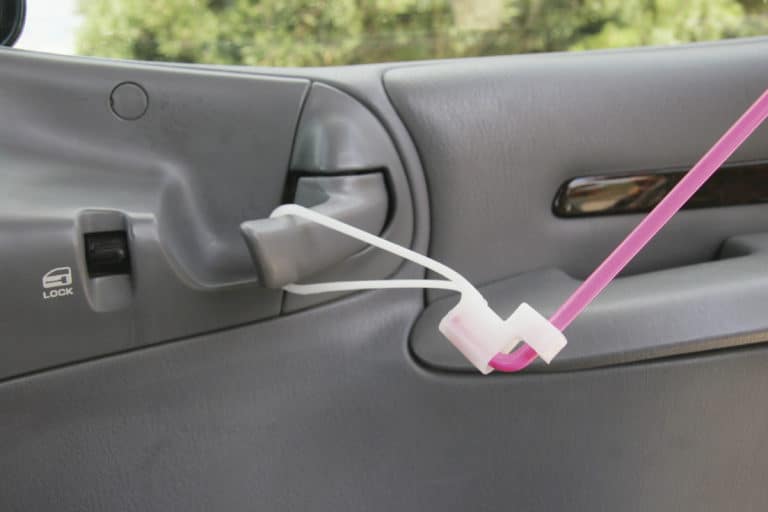
Many modern cars hide their locks but leave the interior door handle functional. If you can reach this handle, you can open the door without touching the lock mechanism itself.
Gathering the Right Equipment
You need a wedge made of wood or plastic, such as an ice scraper or doorstop. You also need a stiff wire with a loop at the end, which you can make from a coat hanger.
Accessing the Door Handle
- Insert the wedge at the top of the door near the window to create a small gap.
- Feed the looped wire through the gap and maneuver it toward the interior handle.
- Position the loop over the base of the handle carefully.
- Pull the wire backward toward the rear of the car to actuate the handle.
Warning: Never use a metal screwdriver as a wedge. Metal tools can scratch your paint or dent the door frame.
On many vehicles, pulling the handle from the inside bypasses the need to unlock the door first. This makes it a reliable option for newer models with concealed locking systems.
Use an Inflatable Wedge and Long Rod for Modern Cars
Recent vehicles from brands like Subaru, Honda, and Toyota often use button actuators or cone-shaped tabs. These require a larger gap and a long-reach tool for successful entry.
Essential Tools for Tight Spaces
An inflatable air wedge is the professional choice for creating space. You will also need a long stiff rod, such as a metal antenna or hood prop rod, ideally with a rubber tip for grip.
Reaching Interior Buttons and Tabs
- Place the deflated inflatable wedge between the glass and the door frame at the top.
- Inflate the wedge gently to create a half-inch space for your rod.
- Slide the long rod through the gap and aim for the central console or door panel.
- Press the unlock button directly or grip the cone-shaped tab with your rubber-tipped rod.
- Turn the tab or press the button to release the lock.
Visual Cue: Look through the window to aim accurately. Many unlock buttons glow or have distinct labels you can spot from the outside.
Over-inflating the wedge or forcing rigid tools can crack tempered glass. Proceed with minimal pressure to ensure safety.
Choose the Right Method by Car Type

Selecting the wrong technique wastes time and risks damage. Use this guide to match your vehicle design with the appropriate entry method.
| Car Lock Type | Recommended Method |
|---|---|
| Vertical lock knob | Shoelace or string trick |
| Horizontal or hidden lever | Wire hanger or Slim Jim |
| Interior handle accessible | Wedge and loop wire pull |
| Button unlock or cone tab | Inflatable wedge and long rod |
| Mechanical key cylinder | Auto jimmie or jiggler set |
Quick Decision Guide
Ask yourself these questions to choose your path. Can you see a lock knob? Use a shoelace. Is the lock hidden but mechanical? Try a wire hanger. Do you see the interior handle? Pull it with a looped wire. Is the system all-electronic? Use an inflatable wedge and rod. Does your car have a standard key hole? A jiggler key is your fastest option.
Prevent Future Lockouts
Avoiding emergency situations is always better than fixing them. Adopting smart habits can save you from future stress and potential damage.
Smart Habits to Adopt
- Keep a spare key with a trusted neighbor or in a magnetic lockbox.
- Install a key tracker like Tile or Apple AirTag to alert you if keys are left behind.
- Carry a mini toolkit with a wire hanger and small wedge in your glove box.
- Practice these methods at home when the door is open to learn your car’s layout.
Familiarity with your vehicle’s internal mechanism cuts emergency response time dramatically. Preparation ensures you never feel stranded.
Final Tips for Safe and Legal Entry
Always verify ownership before attempting any entry method. These techniques are strictly for vehicle owners or authorized personnel acting in an emergency.
Never attempt to open a vehicle you do not own. Check local laws regarding unauthorized access, as legal consequences can be severe even with good intentions. Prioritize safety by avoiding sharp tools near glass and seals. If you feel unsure, contact a licensed locksmith or roadside assistance.
Frequently Asked Questions About Opening Car Door Locks
Can I use a Slim Jim on any car?
No, Slim Jims work best on older vehicles with mechanical linkages. They are often ineffective on modern cars with electronic locks or shielded internal components.
Will using a wire hanger damage my car?
If used carefully, a wire hanger causes no permanent damage. However, aggressive maneuvering can tear weather stripping or scratch interior panels.
How long does it take to learn the auto jimmie method?
Beginners typically take about fifteen seconds per attempt. With practice, you can reduce this time to under ten seconds for most mechanical locks.
What if my car has a cone-shaped locking tab?
You will need an inflatable wedge to create space and a long rod with a rubber tip. The rubber provides the grip needed to turn the smooth cone tab.
Is it legal to open my own car without a key?
Yes, it is legal to open your own vehicle. However, you must be prepared to prove ownership if questioned by law enforcement or security personnel.
Key Takeaways for Learning How to Open Car Door Locks
Knowing how to open car door lock systems without a key empowers you during stressful lockouts. The right method depends entirely on your vehicle’s specific design, from vertical knobs to electronic buttons.
Always prioritize non-destructive tools like shoelaces, wire hangers, or inflatable wedges. Practice these techniques safely at home to build confidence before an emergency occurs. Stay calm, assess your lock type, and apply the correct method with care.