You might think a shiny stainless steel round lock on your storage unit is impenetrable, yet it often fails with surprising ease. The reality is that many disc padlocks prioritize visual deterrence over actual security, making them vulnerable to specific exploitation techniques.
This guide reveals exactly how to break a round lock by targeting predictable design flaws rather than using brute force. You will learn about the twist attack, why internal pins fail under pressure, and how to spot weak locks before they compromise your property.
Execute the Twist Attack Using Leverage

The fastest method to defeat many round disc locks involves applying leverage rather than picking or cutting. While the circular body appears robust, torsional stress reveals that the mounting hardware is often the true weak link in the system.
Apply Torque with a Steel Bar
You can bypass the locking mechanism entirely by using a 24-inch steel bar as a lever. Insert this bar through the shackle or around the lock body to create a solid fulcrum point for maximum effect.
Apply steady and increasing pressure to twist the entire lock off its anchor point. You are not trying to snap the shackle itself but rather to overwhelm the attachment hardware holding it in place.
- Target: Low-cost disc locks with welded hasps
- Force Required: Moderate manual torque
- Time to Fail: Under 30 seconds in tested scenarios
Identify Hasp Shearing Failure
In nearly all successful twist attacks, the lock body remains completely intact while the hasp fails catastrophically. The welded staple connecting the hasp to the door or gate tears clean off during the application of force.
Look for bent or ripped metal around the mounting hole as a primary visual cue of this failure mode. This happens even on locks boasting 9.5mm hardened shackles because the system strength depends on the weakest component.
- Visual Cue: Ripped metal around the mounting hole
- Common Flaw: Thin-gauge steel and poor weld quality
- Pro Tip: Strong shackles mean nothing if the hasp welds are weak
Understand Circular Design Limitations
The round shape of these locks minimizes tool access for cutters but offers zero protection against twisting forces. Since the shackle is enclosed, any leverage you apply transfers directly to the hasp and its mounting point.
Without a reinforced mounting point, the lock becomes a liability rather than a defense. The circular design creates a false sense of security while hiding the structural weakness of the attachment hardware.
Pick the Lock by Exploiting Internal Flaws
Many round disc padlocks sold at storage facilities are trivial to pick due to outdated internal designs. Their poor manufacturing standards and lack of security features make them highly vulnerable to manual manipulation techniques.
Pre-Condition by Pushing the Shackle
You must apply lateral pressure to the shackle by pushing it to the right before attempting to pick. This specific movement relieves internal binding and allows the pins to move freely within the core.
Without this step, the key or pick will not turn smoothly due to misaligned components. This design flaw explains why keys often stick in these locks and simultaneously aids attackers.
- Why It Works: Relieves binding from misaligned parts
- User Impact: Keys often stick without this adjustment
- Security Implication: A major design flaw that aids bypass
Use Top-of-Keyway Tension
Insert a wiper tension tool at the top of the keyway to begin the picking process. Apply moderate rotational pressure in a clockwise direction, as too much force will overset the pins due to loose tolerances.
Expect inconsistent resistance and false sets during this process. The tool size should be approximately 25-thousandths of an inch to fit the keyway properly.
- Tension Direction: Clockwise rotation
- Tool Size: 0.025 inches
- Feedback: Inconsistent resistance levels
Manipulate Pins with a Hook
Use a 0.025-inch hook pick to manipulate each pin individually within the five-pin core. These standard locks typically lack security pins, making them susceptible to single-pin picking methods.
Pins one and two often fail to set on the first pass, while pin three may click but reset easily. Pins four and five frequently overset due to blunt pin ends, requiring two to four reset attempts to open.
- Pin Behavior: Blunt ends create ambiguous feedback
- Cycle Count: Multiple resets usually required
- Difficulty: Low due to lack of security pins
Rake Open for Instant Access
You can skip precision picking entirely by using a wave rake with top-of-keyway tension. Sloppy internal tolerances allow most of these locks to open in under five seconds with a single rake stroke.
This technique requires only beginner skill levels and has a near 100 percent success rate on unmodified units. If a lock opens this easily, it offers no real security for your belongings.
- Skill Level: Beginner
- Success Rate: Near 100 percent on standard units
- Red Flag: Instant opening indicates poor security
Analyze Why These Locks Are So Weak
These failures are not accidental but result from specific manufacturing shortcuts designed to reduce costs. Understanding these root causes helps you either exploit the weakness or avoid purchasing vulnerable models.
Absence of Security Pins
Standard models use plain driver and key pins without any spools, serrations, or mushrooms. This complete lack of security pins eliminates anti-pick resistance and makes raking trivial for anyone with basic tools.
If a lock opens easily with a rake, it definitely lacks security pins. You should look for cores with anti-rake pinning if you require actual protection.
- Detection Tip: Easy raking means no security pins
- Upgrade Path: Seek cores with complex pinning
- Risk: Total lack of pick resistance
Loose Manufacturing Tolerances
High variance in internal alignment leads to inconsistent operation and poor feedback during picking attempts. Low-cost mass production with minimal quality control causes these loose tolerances.
Sticky keys and the need for shackle manipulation are direct symptoms of this issue. These loose tolerances allow multiple pins to jump to the shear line with minimal precision.
- Symptom: Sticky keys and binding
- Cause: Minimal quality control
- Attack Advantage: Pins jump easily to shear line
Off-Center Keyway Design
The eccentric keyway shifts the core to one side, which reduces available space for tools. However, this design choice does not increase security but merely makes picking slightly awkward.
Skilled pickers adapt to this layout quickly, rendering the feature ineffective as a deterrent. The primary drawback is that it makes rekeying or core replacement more complicated for legitimate users.
- Reality: Skilled pickers adapt quickly
- Drawback: Complicates maintenance
- Security Value: Negligible
Compare Cutting Versus Torque Methods
While cutting tools like angle grinders exist, they are often noisy and slow compared to simpler leverage methods. Understanding the difference helps you choose the most efficient approach.
Hardened Shackle Resistance
A 9.5mm hardened steel shackle does resist bolt cutters better than softer metals, but it is not immune to determined attacks. High-powered angle grinders or hydraulic cutters can breach it in 30 to 60 seconds.
The sparks, noise, and visibility make this a high-risk option for intruders. This resistance is often overstated when compared to the ease of torque attacks.
- Tool Required: Angle grinder or hydraulic cutters
- Time: 30 to 60 seconds
- Drawback: High noise and visibility
Torque Is Faster and Quieter
The twist attack with a steel bar produces no sparks and minimal noise compared to cutting. It targets the weakest point, the hasp, and succeeds where brute force cutting might struggle.
This method works best on unreinforced storage units and flimsy gates. The success rate is higher than cutting on poorly mounted locks due to the structural weakness of the hasp.
- Best For: Unreinforced storage units
- Success Rate: Higher than cutting on weak mounts
- Advantage: Quiet and spark-free operation
Spot a Weak Round Lock Quickly
Not all disc locks are equal, and you can identify vulnerable models before they fail you. Use these specific indicators to assess the security level of any round lock.
Inspect the Hasp Mounting
Examine the hasp for thin welded staples or single small bolts running through it. Soft metal around the mounting hole is a clear sign of potential failure under torque.
If the hasp looks flimsy, the lock will fail regardless of the lock body strength. The mounting point is frequently the first thing to break during an attack.
- Check For: Thin welds and soft metal
- Risk: Failure under torque
- Indicator: Flimsy appearance
Test Key Operation
Insert the key and observe if it sticks or binds during rotation. Check if you need to push the shackle to the right to make the key turn smoothly.
These are signs of poor internal alignment and weak construction. A high-quality lock should operate smoothly without lateral manipulation.
- Sign: Sticky or binding key
- Requirement: Lateral shackle pressure
- Meaning: Poor internal alignment
Perform a Rake Test
With proper authorization, try opening the lock with a wave rake to test its resistance. If it opens instantly, it is not a high-security lock and offers little protection.
This simple test confirms the absence of security pins and loose tolerances. It is a quick way to verify the vulnerability of the mechanism.
- Method: Use a wave rake
- Result: Instant opening means weak security
- Verification: Confirms loose tolerances
Prevent Attacks on Your Property

If you rely on a round lock for real security, you must harden the entire system beyond just the lock body. Reinforcing mounting points and upgrading cores are essential steps.
Reinforce the Mounting Point
Use a hardened steel hasp with through-bolts to secure your lock effectively. Back the bolts with steel plates on the inside to distribute force and prevent shearing.
Ensure all welds are full-penetration and professionally done to withstand torque. Your goal is to make the hasp stronger than the lock itself.
- Action: Use hardened steel hasps
- Method: Back bolts with steel plates
- Goal: Hasp stronger than the lock
Upgrade the Core
Replace the stock five-pin core with a high-security alternative featuring security pins. Look for cores with anti-rake channels and tighter tolerances from reputable brands.
Brands like Abloy or Medeco offer cores with verified pick resistance. This upgrade significantly increases the difficulty of bypassing the lock.
- Feature: Spool or serrated driver pins
- Benefit: Anti-rake resistance
- Recommendation: Trusted security brands
Frequently Asked Questions About Breaking Round Locks
Can a round lock be broken without cutting it?
Yes, round locks can often be broken without cutting by using a twist attack with a steel bar. This method shears the hasp or mounting point rather than the lock body itself.
Why do round locks open so easily with a rake?
Round locks open easily with a rake because they lack security pins and have loose internal tolerances. These manufacturing flaws allow pins to jump to the shear line with minimal effort.
Does the circular shape make a lock more secure?
No, the circular shape offers minimal real protection if the hasp is weak or the internal mechanism is simple. It primarily deters cutting tools but fails against torque and picking.
How long does it take to break a round lock?
A twist attack can break a round lock in under 30 seconds, while raking can open it in under 5 seconds. Cutting takes longer, usually 30 to 60 seconds, and creates more noise.
What makes a round lock weak against picking?
The absence of security pins and sloppy manufacturing tolerances make round locks weak against picking. These flaws allow attackers to manipulate pins easily without specialized skills.
Key Takeaways for How to Break a Round Lock
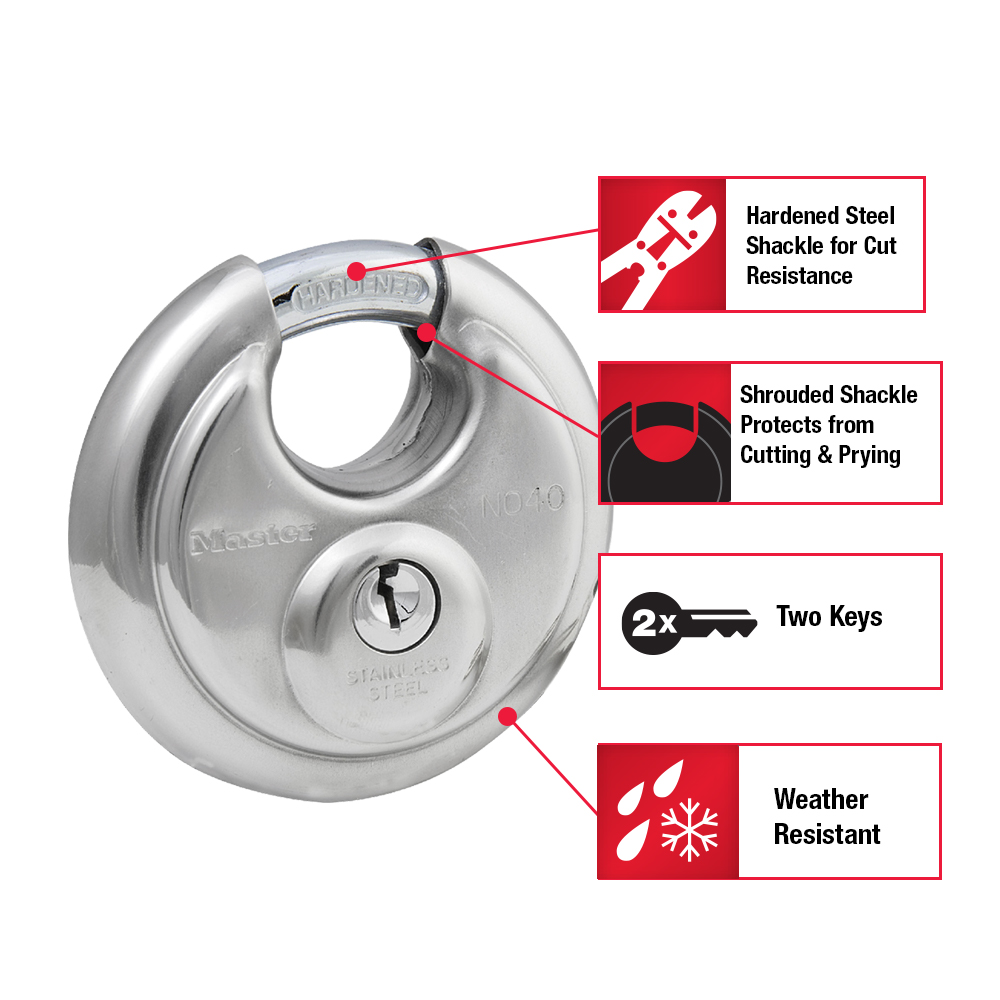
Understanding how to break a round lock reveals that the circular body offers minimal protection if the hasp is weak. The internal mechanism in most models is easily picked or raked due to poor manufacturing standards and a lack of security pins.
The weakest link is almost never the lock body itself but rather the mounting hardware or the simple pin configuration. Attackers leverage these flaws using torque or raking, while defenders must reinforce hasps and upgrade cores to ensure safety.
Security relies on the details of construction and installation, not just the shape of the lock. Choose reinforced hardware and high-security cores to protect your assets effectively.