You likely know the frustration of trying to move a shelf only to find a stubborn joint holding everything together. That small metal disc causing your trouble is a cam lock, and removing it incorrectly can split your particle board or strip the mechanism instantly.
This guide explains exactly how to remove cam locks safely by identifying your specific lock type and aligning the internal markers correctly. You will learn when to use tools for C-shaped variants and how to apply the right force to disassemble your furniture without causing any harm.
Identify Your Specific Cam Lock Type
Successful removal starts with knowing exactly which mechanism holds your furniture together. Using the wrong technique on the wrong lock type is the fastest way to ruin a panel.
Arrow Indicator vs Marked Notch Systems
Most standard cam locks feature a visual cue on the face to guide you. You will usually see a stamped arrow or a simple grooved line. Both markers serve the exact same purpose by showing you where the internal opening sits. Your goal is to rotate the cam until this marker points directly at the bolt entry point.
Spotting the C-Shaped IKEA Variant
Some furniture, particularly from major flat-pack brands, uses a C-shaped cam that requires extraction tools. These often have a Phillips or flathead slot in the center rather than just a turning groove. If you see a screw head slot, you likely need pliers to pull the unit out after rotating it.
Understand How Cam Locks Work Internally
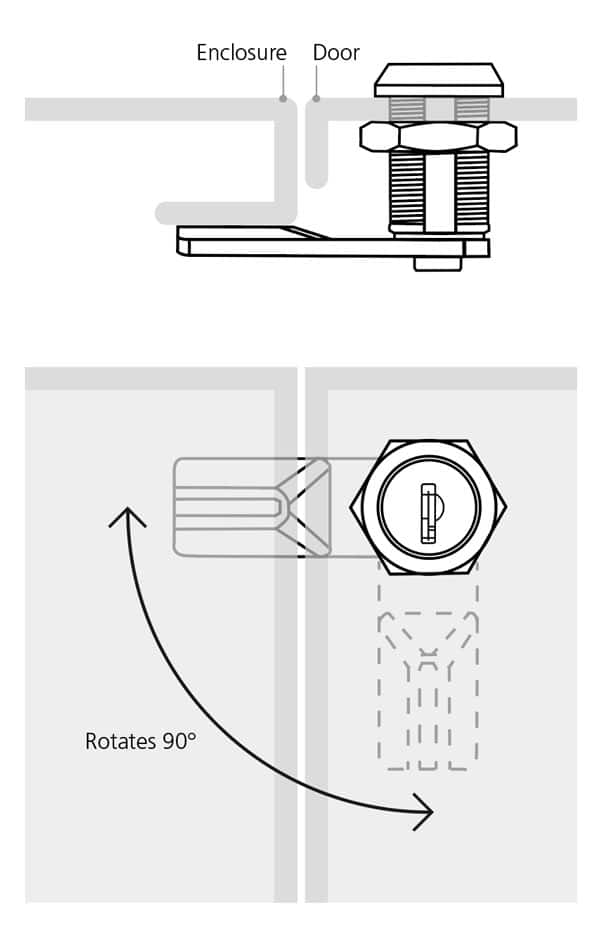
Knowing the mechanics behind the lock prevents you from applying force at the wrong angle. These devices rely on rotation to trap or release a metal pin.
Engaged vs Disengaged Positions
The lock is engaged when the internal throat clamps down on the holding bolt to secure the joint. It becomes disengaged only when you rotate the cam so the opening sits directly under the bolt. This alignment creates a clear channel for the bolt to slide out freely.
Why Alignment Matters More Than Rotation
Many people assume they must turn the cam a full 90 or 180 degrees to open it. The actual requirement is positional alignment of the marker under the bolt. Even a slight misalignment of a few degrees will keep the joint locked tight and risk damage if you force it.
Remove Standard Cam Locks Without Tools
Use this method for typical cam locks where the joint moves freely once you align the internal components correctly.
Align the Marker Under the Bolt
- Locate the arrow or notch on the face of the cam lock.
- Rotate the cam until the marker points straight down toward the bolt entry.
- Shine a flashlight into the hole if you cannot see the bolt position clearly.
Push or Pull the Panel Free
Once your marker aligns perfectly, apply gentle outward pressure on the connected board. For vertical side panels with two locks, push the entire plank upward to release both bolts simultaneously. The joint should slide apart smoothly with minimal effort.
Why You Should Not Need Tools
Standard designs rely on tool-free disassembly when aligned properly. If you find yourself needing pliers or a screwdriver, you likely have a misaligned cam or a C-shaped variant. Forcing a standard lock with tools often strips the metal or cracks the wood.
Extract C-Shaped or Stuck Cam Locks
When alignment alone does not release the joint, you must use tools to extract the mechanism. This process is common for IKEA furniture or seized joints.
Gather Required Tools
- Screwdriver matching the cam slot (Phillips or flathead)
- Needle-nose pliers or a small wrench
- Flashlight for visibility
Determine Correct Rotation Direction
Check where the arrow points before you turn anything. If the arrow points toward the bolt, turn the cam counterclockwise to open it. If the arrow points away from the bolt, turn it clockwise. Turning the wrong way tightens the lock and risks stripping the mechanism.
Rotate and Pull the Cam Straight Out
- Insert your screwdriver and rotate until all resistance disappears.
- Grip the outer edge of the cam body firmly with your pliers.
- Pull the cam straight out parallel to the wood surface while wiggling gently.
Avoid using lateral force or twisting motions during extraction. Sideways pressure can splinter the soft particle board surrounding the hole.
Troubleshoot Common Removal Issues
Even with careful work, you might encounter resistance. Here is how to fix common problems without causing damage.
Cam Won’t Turn or Release
High tension on the bolt often prevents rotation. Press the connected panel inward slightly to relieve this pressure before trying to turn the cam again. Recheck your rotation direction to ensure you are not tightening the lock further.
Cam Turns But Bolt Stays Locked
This issue usually means your marker is slightly off-center from the bolt. Fine-tune the rotation by small increments until the marker sits perfectly under the bolt entry point. Never force the panel apart if the bolt does not slide out easily.
Cam Stuck in the Hole Due to Adhesive
Manufacturers sometimes use glue that bonds the cam to the wood. Grip the cam with pliers and wiggle it gently while pulling with steady linear force. You can tap lightly around the hole with a rubber mallet to help break the bond.
Follow Best Practices for Safe Removal
Protect your furniture investment by following these professional guidelines during disassembly.
Prioritize Alignment Accuracy
The single most important step is getting the marker perfectly under the bolt. Use a flashlight and inspect the joint from multiple angles to confirm position. The panel should move freely with light pressure once this alignment is correct.
Apply the Right Force Type
- Standard cam: Gentle push or lift
- C-shaped cam: Steady pull plus wiggle
- Stuck joint: Inward press plus rotate
Never use a screwdriver to pry against the wood surface. This action gouges the material and ruins the finish.
Work in a Logical Sequence
Follow this order every time: identify the lock type, locate the marker, rotate to align, apply the correct release motion, and extract if needed. Skipping steps or guessing the rotation direction leads to unnecessary damage.
Know What to Expect With Cam Lock Specs
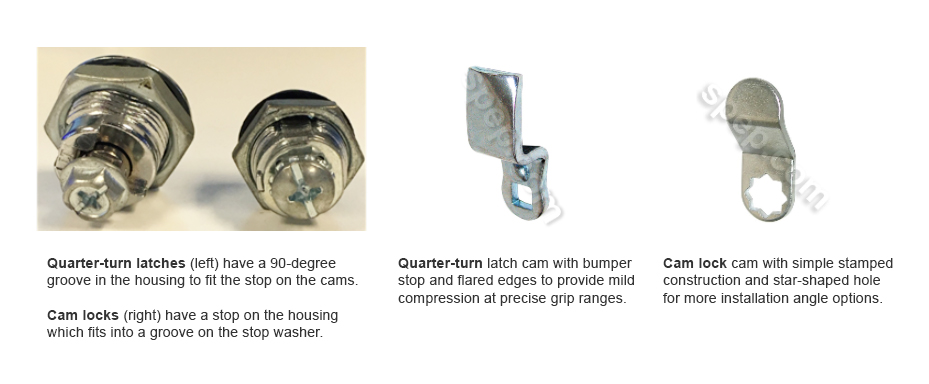
Understanding the differences between lock types helps you prepare the right approach before you start working.
| Feature | Standard Cam Lock | C-Shaped Variant |
|---|---|---|
| Release Method | Align and push | Rotate and pull |
| Tools Required | None | Screwdriver and pliers |
| Alignment Cue | Arrow under bolt | Arrow direction |
| Force Type | Outward push | Linear pull |
| Avg. Time | 10–20 seconds | 1–2 minutes |
Standard locks appear on generic shelves and tables. C-shaped variants are common in branded flat-pack systems.
Prevent Damage During Removal Process
Cam locks are durable, but the wood panels they hold together are often fragile. Protect both components with these safety rules.
Never Force a Joint
If the panel refuses to move, stop immediately. Recheck your alignment, look for hidden screws, or check for adhesive. Forcing the joint results in split wood and ruined furniture that cannot be repaired easily.
Protect Particle Board Edges
MDF and particle board chip very easily when gripped. Pad your plier jaws with tape or cloth before gripping the cam. Always pull straight out without twisting to avoid crushing the hole walls.
Frequently Asked Questions About Cam Lock Removal
Can I remove a cam lock without a screwdriver?
Yes, standard cam locks require no tools if aligned correctly. You only need a screwdriver for C-shaped variants or if the mechanism is stuck and requires loosening before extraction.
Which way do I turn the cam lock to open it?
The direction depends on the arrow position. Turn counterclockwise if the arrow points toward the bolt. Turn clockwise if the arrow points away from the bolt.
Why won’t my cam lock release after turning it?
Your marker is likely misaligned by a few degrees. The opening must sit directly under the bolt for the pin to slide out. Adjust the rotation slightly and try pushing the panel again.
How do I remove a cam lock that is glued in place?
Rotate the cam to the open position first. Then use needle-nose pliers to grip the edge and wiggle it gently while pulling straight out to break the adhesive bond.
Will pulling hard on the panel damage the furniture?
Yes, excessive force can split particle board or strip the metal cam. If the joint does not slide apart with gentle pressure, your alignment is incorrect or the lock is stuck.
Key Takeaways for Removing Cam Locks Safely
Removing cam locks successfully depends on precise alignment rather than brute strength. Always align the marker directly under the bolt before applying any force, and remember that standard locks should never require tools to open.
Use pliers and screwdrivers only for C-shaped variants or seized mechanisms, and always pull in a straight linear motion to protect the wood. With these techniques, you can disassemble your furniture confidently without fear of causing costly damage.