Your garage door might feel secure, but a hidden flaw in the emergency release lever lets thieves break in seconds. Many homeowners miss this weak spot while focusing on windows and main doors, leaving their homes vulnerable to easy intrusion.
This guide shows you exactly how to lock garage door mechanisms using a cheap zip tie to block unauthorized access. You will learn to stop wire hook attacks, maintain emergency safety, and upgrade your overall garage security today.
Secure the Emergency Release Lever Against Theft
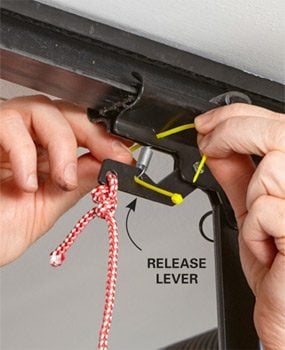
The emergency release lever allows manual operation during power outages, yet its downward-pull design creates a major security gap. Burglars exploit this by sliding a wire under the door to hook the cord and disengage the motor instantly.
Install a Zip Tie Lock on the Release Handle
You can block this attack vector in minutes with a simple physical barrier that stops the lever from moving down.
- Find the pre-drilled hole located on the side of the emergency release handle.
- Thread a heavy-duty zip tie through the hole and around the lever base.
- Pull the tie tight so the lever cannot swing downward when pulled.
- Trim the excess tail flush with the knot to prevent grabbing or tampering.
This modification prevents the cord from disengaging while keeping the mechanism ready for true emergencies.
Pro Tip: Store a pair of wire cutters in your car or near the interior house door. Label them clearly so family members know they are for cutting the garage release tie during emergencies.
Select the Correct Zip Tie Material
Not every plastic tie offers sufficient strength for long-term security against determined intruders.
- Use UV-resistant nylon zip ties with at least 50 lb tensile strength.
- Choose black or dark colors to blend in with the opener mechanism.
- Avoid thin, brittle, or faded ties that may snap in cold weather.
Heavy-duty ties resist weathering and tampering, making them the ideal choice for this critical security upgrade.
Prevent Common Break-In Methods Used by Thieves
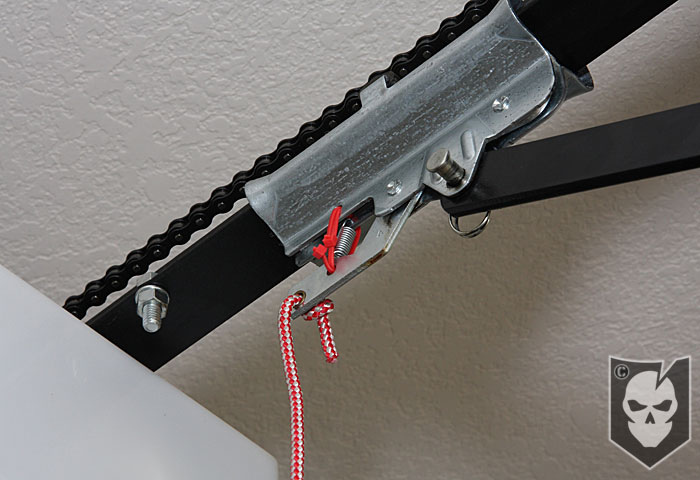
Garage burglars rely on speed and stealth rather than brute force to enter your home. Understanding their specific tactics helps you implement targeted defenses that stop them cold.
Stop Wire Hook Attacks Effectively
The wire hook method remains the most popular way for thieves to trigger your emergency release from the outside.
- A thief slides a stiff wire like a straightened coat hanger under the closed door.
- They form a loop to catch the release cord hanging from the opener.
- A quick upward flick pulls the lever down, disengaging the door from the motor.
Your defense: The zip tie creates a physical block that stops the lever from moving even if the wire hooks the cord.
Visual cue: Test your work by trying to pull the lever down manually. If it stays rigid and will not budge, your security measure is working correctly.
Block Door Lifting After Release
Even if someone disengages the opener, you can make lifting the heavy door much harder for them.
- Check door balance because an unbalanced door is noisy and difficult to lift quietly.
- Install a secondary lock like a slide bolt on the track for manual disengagement only.
- Use a security bar that braces against the floor to block upward movement from the inside.
These layers add significant resistance beyond the initial zip tie lock on the release mechanism.
Upgrade Your Garage Door Security Systems
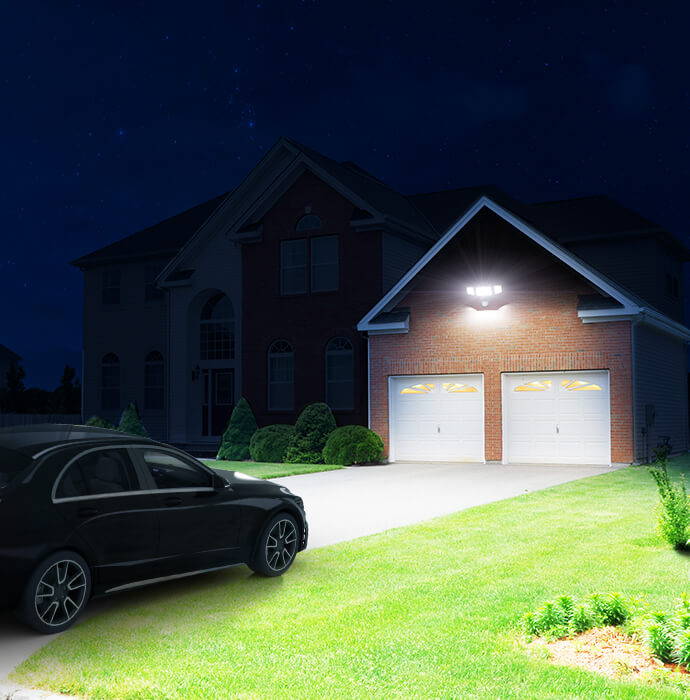
While the zip tie fix is powerful, combining it with other upgrades creates a comprehensive defense system for your property.
Install Motion-Sensing Lights
Dark garages invite intruders who want to work unseen without drawing attention from neighbors.
- Place LED motion lights on both sides of the garage door exterior.
- Set them to trigger automatically at night or during low-activity hours.
- Pair lights with a door sensor alarm for immediate audible alerts.
Bright, sudden light scares off most criminals before they can attempt any forced entry.
Use a Garage Door Alarm Sensor
Small devices can detect unauthorized opening and alert you instantly to potential threats.
- Magnetic contact sensors trigger a loud alarm when the door lifts unexpectedly.
- Some models sync directly with home security systems or smartphone apps.
- Battery-powered versions offer easy installation without complex wiring.
Place one on the largest movable panel or at the top of the door track for best results.
Consider a Smart Garage Controller
Smart openers or add-on controllers let you monitor and control your garage door remotely from anywhere.
- Monitor door status in real time to see if it is open or closed.
- Receive instant alerts on your phone whenever the door opens.
- Close the door remotely if you forget to shut it before leaving.
This technology ensures you never leave your home vulnerable due to simple forgetfulness.
Maintain Emergency Access for Safety
Security should never compromise safety, so your garage must remain a viable escape route during fires or power failures.
Plan for Power Outages Carefully
If the zip tie blocks the release, you need a clear plan to open the door manually during an emergency.
- Keep wire cutters in two locations such as inside your car and near the house entrance.
- Train all adults and teens in the household to locate and use the cutters quickly.
- Test the system monthly by cutting the tie, opening the door, and reinstalling a new one.
Expert Note: Never glue, weld, or permanently alter the release mechanism. Always use a removable solution like a zip tie to ensure safety compliance.
Avoid Common Installation Mistakes
Homeowners often make simple errors that reduce the effectiveness of their new security measures.
- ❌ Using weak zip ties that break in cold weather or from sunlight exposure.
- ❌ Leaving long tails that give thieves something to grab or pull on.
- ❌ Forgetting emergency tools which leaves you trapped during power outages.
- ❌ Relying only on the opener lock since most lack real deadbolts and are easy to bypass.
Fixing these gaps ensures both maximum security and continued safety for your household.
Test and Maintain Your Security System Regularly
Like any security measure, your garage lock needs regular checks to ensure it remains effective over time.
Monthly Inspection Checklist
- [ ] Zip tie is intact and tight around the lever
- [ ] No fraying, brittleness, or UV damage visible
- [ ] Lever cannot move downward when pulled
- [ ] Wire cutters are present and functional
- [ ] Alarm responds correctly to door movement
Replace the zip tie every 6 to 12 months, or sooner if it shows signs of weather damage.
Simulate a Break-In Attempt
Test your setup exactly as a thief would to verify its effectiveness against real-world tactics.
- Slide a bent wire or ruler under the closed garage door.
- Try to hook and pull the release cord downward.
- Attempt to lift the door after simulating the release action.
If the lever does not move and the door stays shut, your system is working perfectly.
Why This Method Works Better Than Others
Many people search for how to lock garage door systems and find complex solutions that fail in practice.
Zip Tie vs. Padlocks
- Padlocks require drilling which may void warranties or damage tracks.
- Visible locks attract attention making them a target for thieves.
- Zip ties are invisible showing no external signs of modification.
Plus, padlocks can freeze or corrode over time while zip ties remain flexible and functional.
Zip Tie vs. Unplugging the Opener
Unplugging the unit seems safe but does nothing to stop the emergency release mechanism. The door can still be disengaged and lifted manually by anyone with a wire. The zip tie actually blocks the attack vector completely.
Cost and Time Comparison
| Method | Cost | Time | Reversible? | Effective? |
|---|---|---|---|---|
| Zip Tie Lock | $0.10 | 2 minutes | Yes | High |
| Padlock Kit | $20–$50 | 30+ minutes | Yes | Moderate |
| Unplugging Opener | $0 | 1 minute | Yes | Low |
| Security Bar | $30–$60 | 15 minutes | Yes | High |
The zip tie wins clearly for speed, cost, and overall effectiveness against common threats.
Final Tips for Total Garage Security
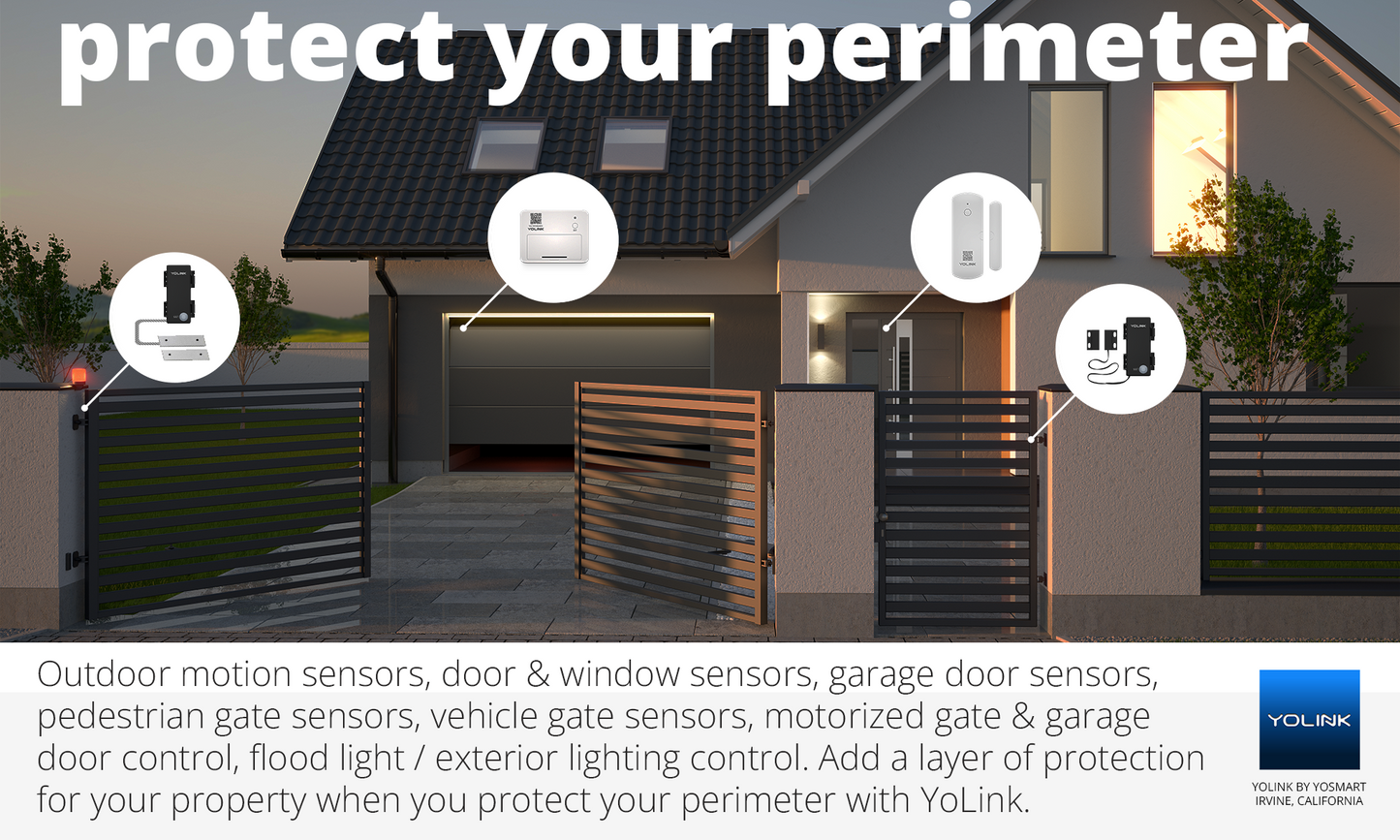
Protecting your garage means thinking beyond just the main door mechanism to cover all potential entry points.
Secure the Pedestrian Door
Many garages have a smaller door leading into the house that often lacks sufficient protection.
- Reinforce it with a solid core door and a high-quality deadbolt lock.
- Never leave keys inside the garage where thieves can reach through broken windows.
- Install a peephole or camera to see who is outside before opening.
Do Not Store Valuables in Plain Sight
Avoid leaving bikes, tools, or packages near the door where they are visible from outside. Out-of-sight items are far less tempting to potential thieves looking for a quick score.
Close the Door Every Single Time
Even for just a minute, always close the garage door completely. Most break-ins happen during daylight hours when no one expects trouble or suspects foul play.
Learning how to lock garage door systems is not about high-tech gadgets but stopping simple attacks with smart fixes. The zip tie method takes seconds, costs pennies, and blocks the most common burglary technique used today. Pair it with alarms, lighting, and awareness, and your garage becomes a fortress instead of a weak spot.
Secure your garage today because one zip tie could save your home tomorrow.
Frequently Asked Questions About How to Lock Garage Door
Can a zip tie really stop a burglar from opening my garage?
Yes, a heavy-duty zip tie blocks the emergency release lever from being pulled down by a wire hook. This stops the most common method thieves use to disengage the door and gain entry.
Will blocking the release lever prevent me from opening the door in an emergency?
No, you can still open the door manually by cutting the zip tie with wire cutters. It is crucial to keep cutters accessible near the garage or in your car for power outages.
How often should I replace the zip tie on my garage door?
You should inspect the tie monthly and replace it every 6 to 12 months. Sunlight and weather can cause plastic to become brittle, so swap it out if you see any cracking.
Is it safe to use this method if I have children in the house?
Yes, as long as you teach older children about the system and keep wire cutters accessible. The zip tie does not interfere with normal automatic operation of the garage door.
Does unplugging my garage door opener stop thieves from breaking in?
No, unplugging the unit does not stop someone from using a wire to trigger the emergency release. You must physically block the lever to prevent this specific type of break-in.
What type of zip tie is best for securing a garage door?
Use UV-resistant nylon zip ties with at least 50 lb tensile strength. Black or dark-colored ties are best because they blend in and resist degradation from sunlight.
Key Takeaways for Learning How to Lock Garage Door Safely
Securing your garage door is as simple as installing a heavy-duty zip tie on the emergency release lever. This low-cost fix blocks the most common break-in method while maintaining full safety for your family during emergencies.
Combine this physical barrier with motion lights, alarm sensors, and smart monitoring for total protection. Take action today by checking your release lever and installing a zip tie to secure your home against potential intruders.